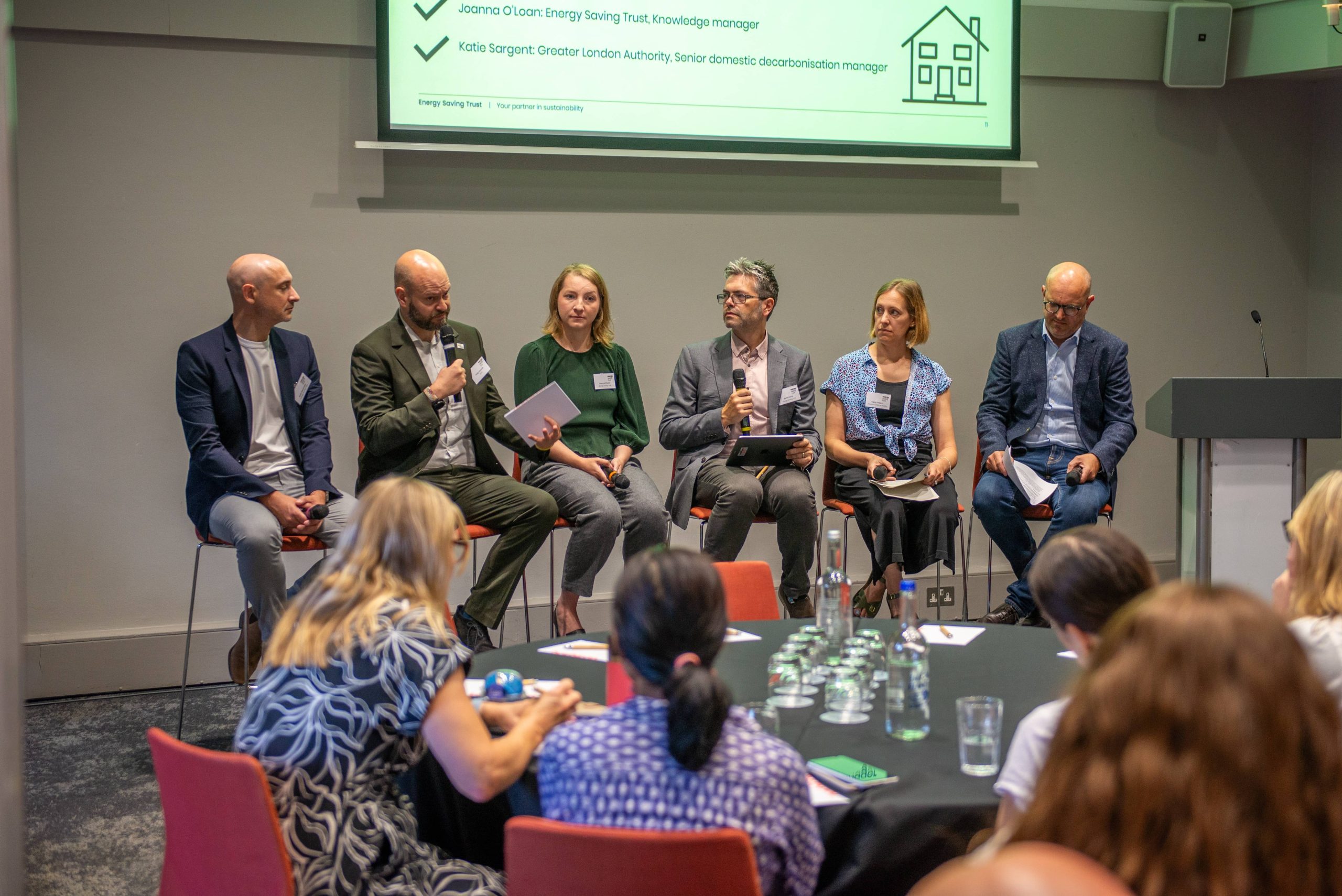
Local authorities don’t need to wait for certainty before acting on the Warm Homes Plan. That was the clear message from our recent event in London.
While questions remain around funding, delivery structures and policy details, speakers agreed that local authorities can start building momentum now by testing, learning and working with local partners.
We were joined by experts from across the sector who shared practical advice on how to make the Warm Homes Plan work in your area. Here are the key takeaways.
Move forward now despite uncertainty
The principle behind the Warm Homes Plan is straightforward: making homes warmer, more affordable and fit for the future. But it’s happening at a time when things don’t feel simple.
Households are still feeling the effects of the cost of living crisis and rising energy bills, with vulnerable residents often hit hardest. For councils tasked with delivering the Plan, the evolving political context and change in Labour leadership is creating even more uncertainty and unanswered questions.
Stew Horne from Energy Saving Trust stressed that local authorities must move at pace and make good decisions now to deliver the Plan for people across the country.
Improving homes, cutting bills and reducing emissions makes buildings healthier and means we get more resilient communities over the long term.Stew Horne, Group Head of Sector Intelligence and External Affairs, Energy Saving Trust
Councils don’t need to wait for complete certainty to get started. Katie Sargent from the Greater London Authority advocated for a systems approach to retrofit. By starting with the data they have available, councils can identify barriers and build momentum from there.
Test and learn
Several speakers noted that capacity remains a challenge, with local authorities often balancing ambitious delivery targets against stretched teams and competing priorities.
To counter this, a key sentiment shared by the panel was: don’t let perfect get in the way of good enough.
Joanna O’Loan from Energy Saving Trust recognised that while local authorities have huge ambition to deliver the Warm Homes Plan, many questions remain unanswered. There’s also a reputational risk, as they don’t want to be seen as wasting public money.
You can start without the answers to everything and build in testing and learning as you go – which is needed when we have so many unknowns.Joanna O’Loan, Knowledge Manager, Energy Saving Trust
For Joanna, overcoming this means giving councils permission to start small, so they can test and learn, and move forward without knowing all the answers.
She cited this year’s Magenta Book updates as the UK Government giving permission for local authorities to build testing and learning into their programmes. This will be key to start delivering the Warm Homes Plan while there are many unknowns.
Any data is enough to get started
There’s no such thing as perfect data. But there is a strong chance you’ve got data that’s good enough to act on.
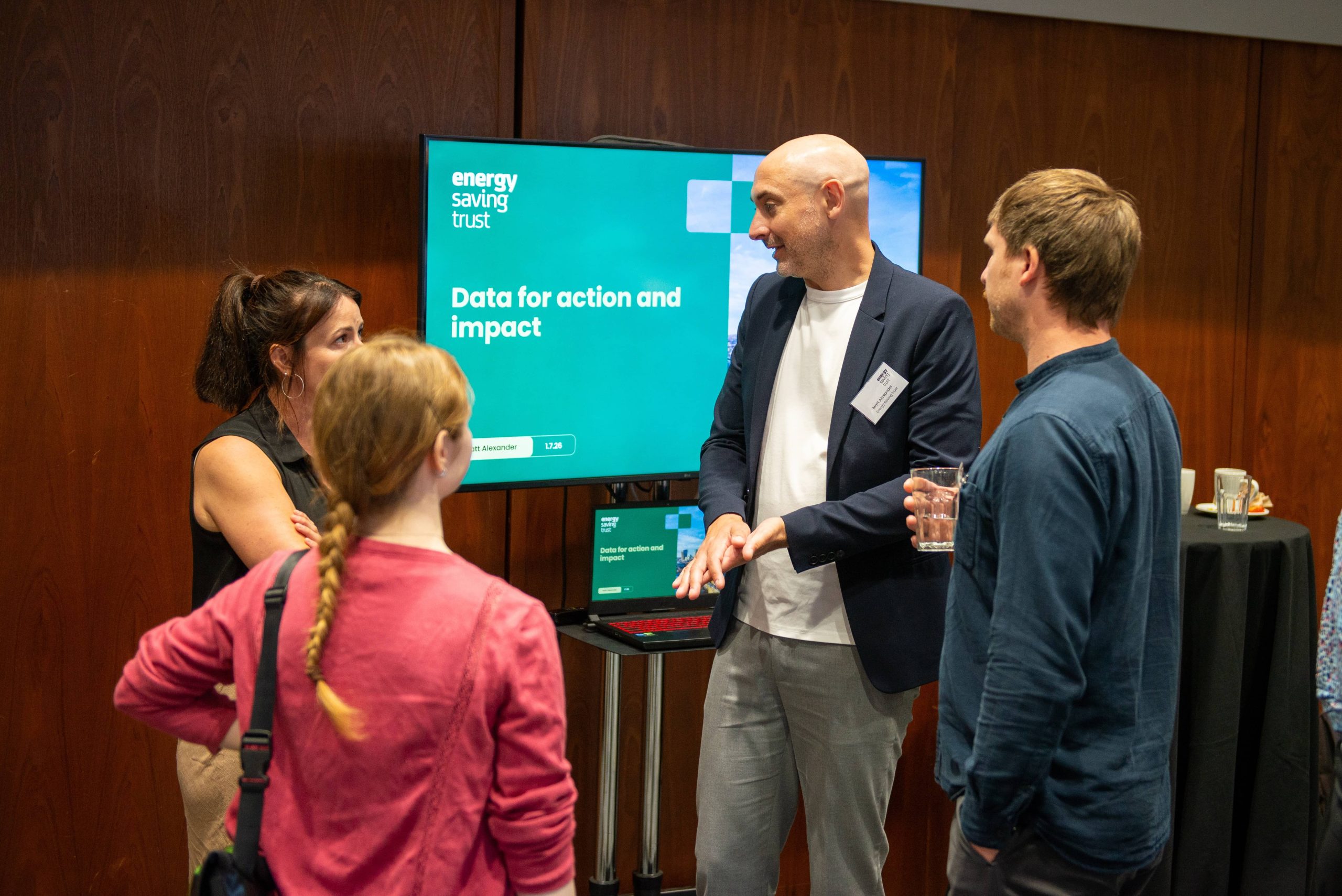
For Matt Alexander from Energy Saving Trust, that’s an important mindset for local authorities to adopt as they use data to inform delivery of the Warm Homes Plan.
Councils are often working from fragmented data. By looking for signals repeated across data sets and sources, they can identify a starting point and improve their understanding over time.
That doesn’t mean they need all the answers from the start. Gaps in the data can often be filled through conversations with residents, installers and other local authorities facing similar challenges.
Have the right model in place to scale delivery
Once programmes get underway, they can scale quickly. But local authorities have typically been held back by annual boom and bust cycles of schemes.
James Grugeon from Warmworks stressed the importance of having a ready-to-go delivery model and supply chain in place.
He outlined four factors that will help local authorities scale delivery successfully:
Be ready to move quickly when opportunities arise.
Build a local supply chain that can deliver immediately.
Create partnerships with installers and local SMEs.
Offer longer contracts that give suppliers confidence to invest in staff and training.
Build a local delivery framework with national consistency: local labour and local knowledge, backed by national standards in customer service and quality.James Grugeon, Senior Strategic Advisor, Warmworks
To support this approach, James recommended appointing a managing agent that can hit the ground running and help programmes deliver effectively from day one.
Devolution is an opportunity to build around local needs
Devolution was a key topic of the event, with speakers agreeing it could give councils greater control over delivery and strengthen regional partnerships. As several panellists noted, national ambition will only become reality if it happens locally.
Local authorities understand the intricacies and requirements of their housing stock. They’re also close to residents and community groups, which Katie described as the ‘unsung heroes’ of home retrofit.
James echoed this, advocating for setting up programmes that meet local needs. This ensures everybody who requires support can get it as quickly and efficiently as possible through a trusted relationship with the local council.
Storytelling matters
When it comes to talking about retrofit work, Philip Glanville from UK100 said it’s essential to tell impactful stories.
This involves highlighting the co-benefits of retrofit – such as health, warmth, property value and local jobs and skills. This helps residents understand why home upgrades matter and also helps to tackle misinformation and build confidence. The key to this is involving people from communications teams from the start and building in the budget for these activities.
We’re working in an environment where trust has been lost. We have to try to gain that trust back with residents.Katie Sargent, Senior Domestic Decarbonisation Manager, Greater London Authority
Local authorities shouldn’t underestimate the importance of building this trust with residents. As Katie noted, councils are now working in an environment where a lot of trust has been lost around sustainability initiatives. They need to be able to reassure residents that this is going to help them by making their homes cooler in summer and warmer in winter and lowering their fuel bills.
What’s one practical step for local authorities to take now?
Joanna: Start with a small pilot. Test, learn and improve the service over time.
Katie: Engage with community groups already working in the space.
James: Don’t let the perfect be the enemy of the good. We need to get going.
Philip: Put strong governance structures in place.
Matt: Become comfortable with uncertainty. The sooner we do, the sooner we can move beyond paralysis.
What happens next?
While there are still questions about the Warm Homes Plan, one thing is clear: local authorities will play a key role in making it happen.
The Plan presents a major opportunity to make homes warmer, cut energy bills and improve residents’ quality of life.
The next step is to build on the momentum. That means building local capacity, strengthening partnerships and putting the right delivery models and support in place so residents can benefit as soon as possible.
Need support with the Warm Homes Plan?
We have the insight and tools you need to make the Warm Homes Plan work in practice.
Get in touch today to talk about your next steps.