Scottish Youth Film Foundation, Cairngorms, Scotland

“We’re the best generation to spread the word on climate change”

Set against the dramatic landscape of the Cairngorms, six young aspiring filmmakers are with the Scottish Youth Film Foundation (SYFF) for a weekend of training. They come from different parts of Scotland and bring different lived experiences. But they share one challenge: breaking into an industry that feels closed and often inaccessible. Many don’t know anyone in the media industry, and most can’t afford equipment or training.

This is where our Energy Saving Trust Foundation funding comes in. It creates pathways for young people who want to tell climate stories but need support, mentorship and real‑world access. Without it, many of these young people wouldn’t get the chance to explore media or climate storytelling at all.

Scottish Youth Film Foundation logo

A generation growing up with climate change

At the residential, SYFF Co-Founder Scott Mackay teaches two participants how to use a camera drone. Inside, the group chats, gets comfortable with one another and prepares for a day of practical filming. There’s a strong sense of anticipation about getting hands on with professional equipment.

“This is the best part of my job,” says SYFF Co-Founder and Executive Director David Barras. “We teach in small groups as you need more hands-on practice for using the camera and time is the most important thing; time, equipment and space.”

The programme aims to reach young people who rarely get these opportunities. “We’re trying to get it to young people who maybe never see that opportunity, or who don’t know anybody in either media or the climate or politics,” explains Scott.

SYFF also tackles long-standing inequalities in media. The group commits to at least 50% female participants. This year, the selection process produced a majority female group. “The best candidates were mostly female,” says Scott. “So there are now four girls and two boys.”

Diversity and representation are at the heart of recruitment. “Every single one of our young people has a barrier: socio economic, geographical, being LGBTQ+ or from an ethnicity that’s not integrated into the media sector so well. We want young people who are underrepresented in the industry to tell the climate stories rather than the usual cast.”

The residential helps the group settle, bond and feel supported. Heather Bowry, General Manager at SYFF, says the shared experience is vital. “The joy of the residential makes a huge difference. They become a family. By the time they’ve got to the end of the programme, they’re a really supportive unit.”

For the young people, climate change isn’t an abstract topic. It has shaped their schooling, their newsfeeds and their understanding of the world. “Climate change is such an important part of growing up Gen Z,” says Emily, 19. “With this thing looming over our heads, it’s always in the news.”

Munenyasha, 23, feels the same. “I think the best way for us to get attention and spread awareness is through film and through videography because it’s quite a universal thing.”

The challenge is clear:

  • Give young people who care deeply about climate change a way to tell the stories that matter to them
  • Remove the barriers that stop them entering the media industry.
It makes awareness of climate change more accessible, and easier for people to look at and researc Munenyasha SYFF member

Creating space for young climate storytellers

The SYFF programme gives young people practical experience and real industry exposure. Our Foundation funding allows SYFF to strengthen climate storytelling within their long‑standing collaboration with the Scottish Parliament’s Festival of Politics. As part of this, the participants spend the weekend preparing to broadcast at the festival and take part in a dedicated Climate Day.

“When funding came up with Energy Saving Trust Foundation, we knew we could pivot a lot of the stuff that we’re doing within the Festival of Politics towards the climate,” says David. “This project is based one we did during COP26. We already knew that this model of training young people worked to tell climate stories.”

Over the weekend, the group learns to set up cameras, record vox pops, use sound equipment and work as a crew. They also experiment with drones, lenses, rigs and other kit they’d never normally access.

“It’s not just that young people are getting to make films,” says Heather. “They’re actually getting to see presentations and talk to people like the founders of the Climate Cafe. It’s quite inspiring because they were also young when they started it.”

The programme encourages young people to bring their lived experience into their work. Scott explains that this shapes the stories they choose. “If there’s something that speaks to them, that’s their lived experience, they want to cover it.” Participants also learn to look beyond their own experience and explore different perspectives. This leads to rich and empathetic storytelling.

Heather sees this every year. “They learn from each other in terms of seeing other people’s lived experiences come through, and even if they all have different barriers, they know about checking their privilege occasionally. I see them call each other out. They know sometimes it’s okay to do that because they’re really comfortable with each other.”

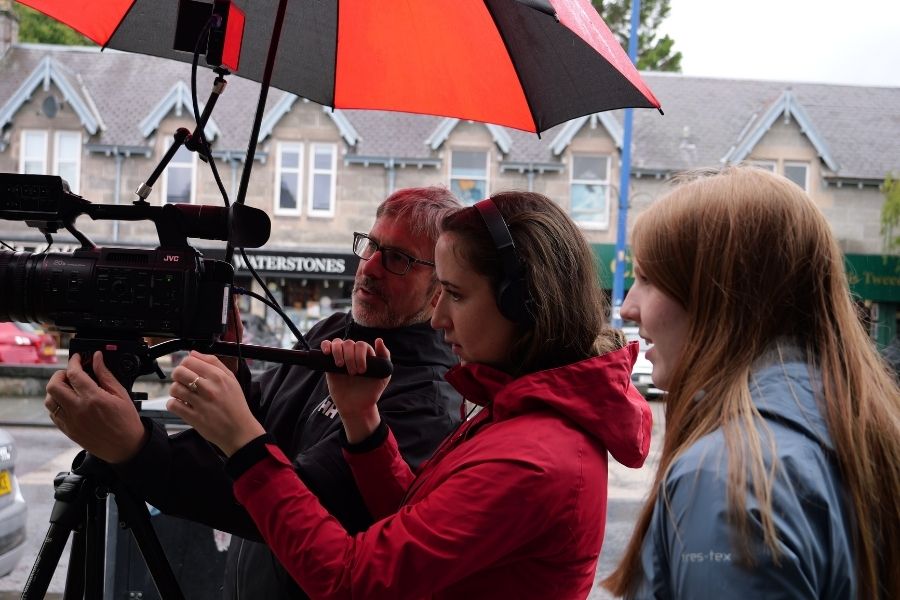
Scottish Youth Film Foundation members filming on location.

Cultivating informed journalists of the future

A key part of the weekend is a practical training session in Aviemore. David drives Emily, Erin and Munenyasha into the town centre to gather vox pops. They take turns interviewing, filming and managing sound. The experience is challenging but rewarding, giving them a taste of real‑world journalism.

“We want to cultivate good climate content and informed journalists of the future,” says David.

Emily says the experience widened her understanding of climate issues. “It’s given me more of an understanding of climate change as a global issue, rather than just locally or nationally.”

Access to equipment is another major barrier that SYFF removes. “It can be really hard when you’re trying to learn journalism and media skills,” Emily explains. “It’s very expensive to get technical equipment, and that’s a huge barrier to entry.”

SYFF removes that barrier completely. “We have one rule which is that young people don’t pay,” says David. “That’s a barrier, so you can’t have that. We make it free, and we feed them.”

Recruitment this year reinforced the value of personal connection. “You can send as many adverts out on the internet as you want,” Scott says. “But ultimately, every single one of those young people came here because we spoke to them. The value of that personal connection is the big thing we’ve learned this year.”

SYFF stays in touch with its alumni too. Many keep coming back for advice, confidence or peer support. Scott says this community can change lives, especially for those with no contacts in media.

We know we’ve been successful when young people say they’ve had a great experience, know more than when they started and they’re a more confident, more capable young person. David Barras Co-Founder and Executive Director, SYFF

Stories that shape Scotland’s climate future

The impact on the young people is clear. Confidence grows, skills develop and a sense of possibility emerges.

“The changes young people experience on the programme are really remarkable,” says David. “We know we’ve been successful when young people say they’ve had a great experience, know more than when they started and they’re a more confident, more capable young person.”

For Erin, 21, the programme offered a rare route into an industry she wants to join. “It’s quite hard to do and the programme gives me a bit of faith that I can actually do it because I always tell people that I want to do something in the media, and now I can say that I actually have experience in that.”

For many, the programme is their first step towards a media career. For others, it helps them understand how storytelling can influence climate action. For all, it builds a sense of belonging and support.

Munenyasha sees film as a powerful tool. “It makes awareness of climate change more accessible, and easier for people to look at and research, because of the SYFF programme and the Energy Saving Trust Foundation.”

These young people now have the skills, confidence and industry exposure to tell meaningful climate stories shaped by their own lived experiences. As Scotland faces some of the UK’s most visible climate impacts, the need for strong and diverse storytellers has never been greater.

In Emily’s words, “our generation has practically grown up alongside climate change. I think we’re the best generation to spread the word.”

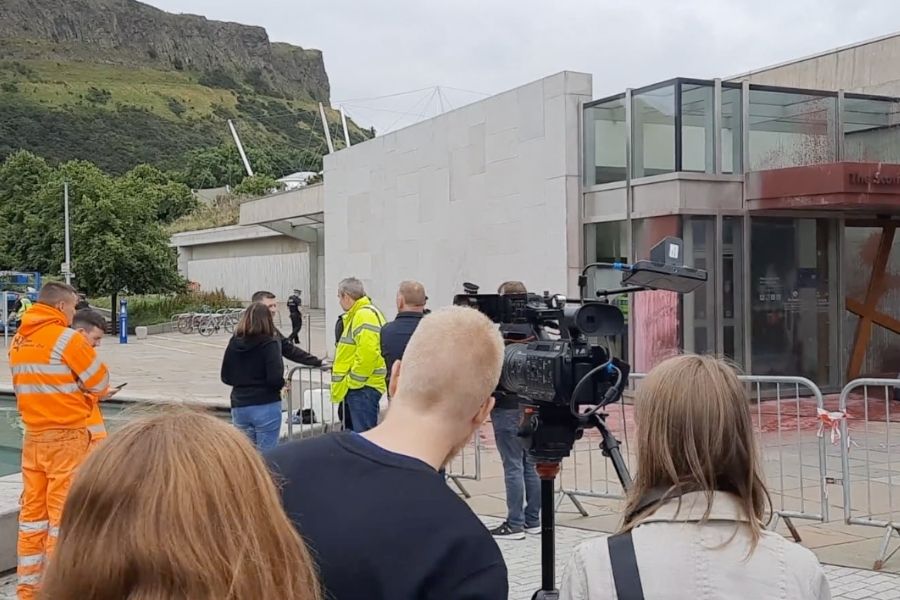
Scottish Youth Film Foundation members on location

Get in touch

If you have any questions or would like to discuss supporting the Foundation, please email The Foundation.

Get in touch

Last updated: 3 March 2026