Blog Post 28 October 2026

The most economical ways to use your central heating

Andrew Northcott
Reviewed by
Andrew Northcott
Knowledge Manager

At a glance

  • Heating and hot water make up over half of a typical home's energy use.
  • Using heating controls like programmers, thermostats and radiator valves helps heat your home only when needed.
  • Setting your thermostat to the lowest comfortable level, usually 18–21°C, can cut energy use without reducing comfort.

Did you know that the typical household spends over half of their energy bills on heating and hot water? So, it pays to know the most economical way to use your central heating.

If you don’t have them already, installing a programmer, thermostat and thermostatic radiator valves can save:

  • £100 a year in Great Britain (GB)
  • £110 a year in Northern Ireland (NI)

But what’s the best way to use your central heating controls to make sure you’re not wasting energy and money?

Here are our top tips on setting and using your central heating controls correctly. Remember to check any instruction manuals or user guides for how to use your heating controls. Although we focus on central heating systems that use boilers, we have other advice about running a heat pump efficiently.

  1. Set your room thermostat
  2. Learn how to use your programmer
  3. Use thermostatic radiator valves (TRVs)
  4. Check your boiler thermostat
  5. Invest in smart heating controls
  6. Keep your boiler serviced

Set your room thermostat

A room thermostat stops your central heating system using more energy than it needs to. It turns the heating on until the room reaches the temperature you’ve set. Once it reaches the set temperature, it turns the heating off until the temperature drops again.

There isn’t usually one in each room. Typically a house will have just one room thermostat, but some might have two or more.

You don’t need to turn your room thermostat up when it is colder outside. Your home will heat up to your chosen temperature whatever the weather, but it may take a little longer on colder days.

Remember: turning up your room thermostat won’t make your home heat any faster!

Also, bear in mind that room thermostats need a free flow of air to get a better sense of the temperature. Therefore, it’s important to make sure they’re not blocked by curtains or furniture and to keep them away from heat sources like radiators.
What’s the best temperature to set my central heating to?

You should set your thermostat to the lowest comfortable temperature for your needs. For most people, this is between 18°C and 21°C.

If you can, turning down your thermostat from 22°C to 21°C can save £120 a year in GB and £80 in NI on energy bills.

Learn how to use your programmer

A timer or programmer lets you control when your heating and hot water comes on and when it goes off.

This is useful because it means you can programme your central heating based on when you need it. For example, you can programme the heating system for when you want warmth and switch off when you’re not at home or at night.

While these controls are found in many heating systems, the advice for using them varies if you have heat pump or electric heating.

Using a programmer, you can set ‘on’ and ‘off’ time periods for your central heating. Typically, with a boiler you should set the central heating programme to:

  • Turn on around half an hour before you get up.
  • Turn off around half an hour before you go to bed.

Check that the clock on the programmer is correct before you set your programmes. Many programmers will change automatically when the clocks change in spring and autumn. But if it doesn’t, you will need to remember to adjust it.

When you should turn your heating on will depend on your circumstances, but generally you should put it on when you start to feel cold.

Find out more about heating controls.

Use thermostatic radiator valves

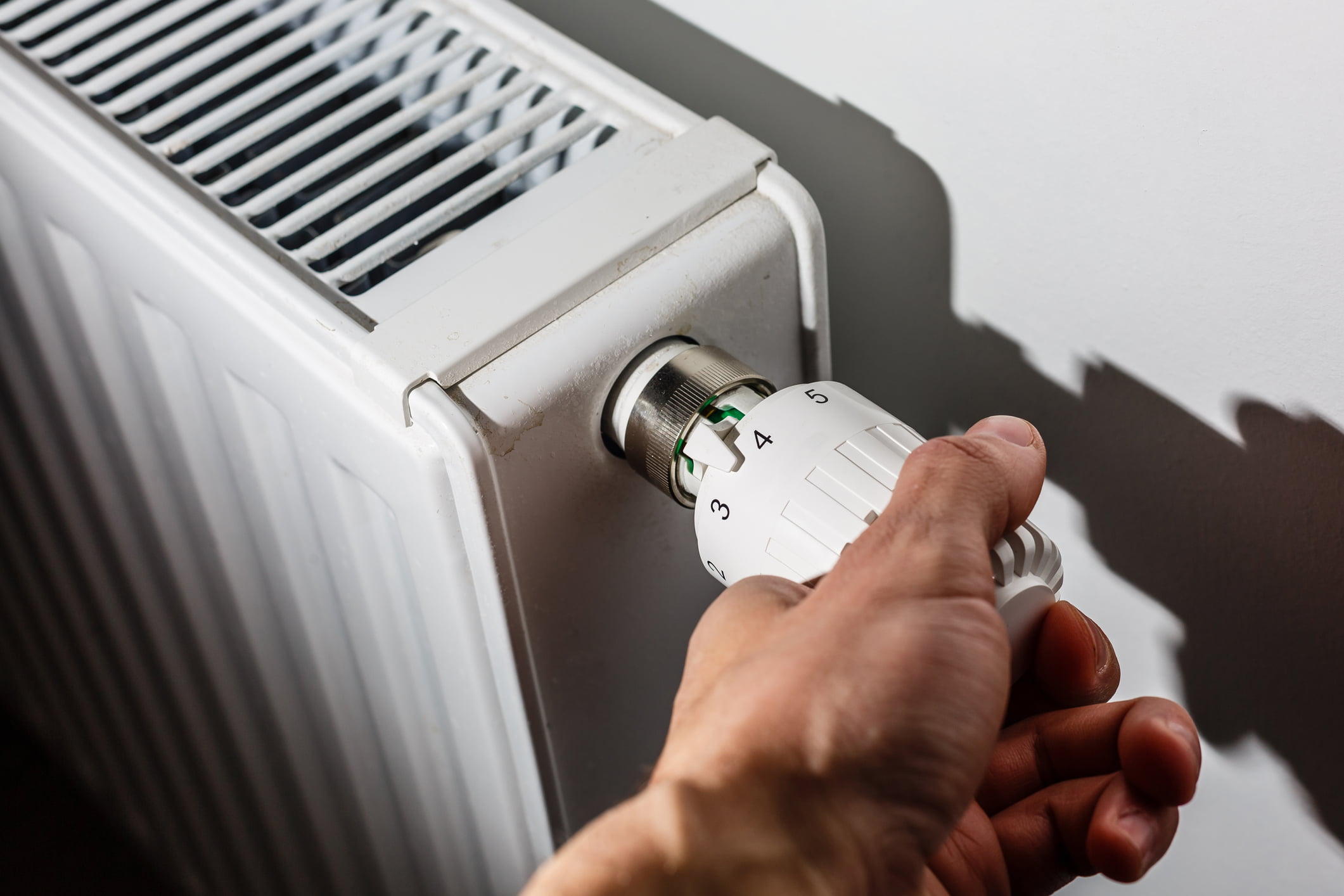
Thermostatic radiator valves (TRVs) let you take more control of individual room temperatures by controlling the temperature of your individual radiators. This lets you turn down the heat in rooms you aren’t using and save energy.

TRVs work by sensing the air temperature around them. If the room is warmer than the setting on the TRV, the valve will close a little. This reduces the volume of hot water flowing into the radiator.

If the room temperature is lower than the valve setting, the valve opens, increasing the flow of hot water into the radiator.

TRVs usually have a scale from 0 – 6, where zero (0) is off and six (6) is fully open. You should aim for the lowest setting that keeps the room at a comfortable temperature. Doing this will reduce the volume of hot water flowing into the radiator, using less energy and saving you money.

For example, you might want to:

  • set the TRV at 3 to 4 for rooms you use the most
  • turn it down to 2 to 3 for bedrooms and rooms you use less

While you can turn TRVs down to reduce the temperature and save on heating costs, remember: if it’s too cold, turn it up a little.

Did you know? Adding TRVs to a system that already has a programmer and thermostat can save £30 a year in GB and £40 in NI.

A close up of someone adjusting a TRV.

Check your boiler thermostat

Your boiler should have a dial or a digital temperature setting, sometimes marked in numbers or from minimum (min) to maximum (max). This sets the temperature of the water that’s pumped from the boiler through the radiators to heat your home. This is known as the boiler flow temperature.

If your boiler thermostat is set higher than needed, lowering it could save you money. This is because a lower flow temperature helps your boiler work more efficiently.

But if it’s not set high enough when it’s very cold outside, your home may not reach the temperature you need to be comfortable.

Don’t lower it below 65C if you have separate hot water cylinder, as lower temperatures can lead to the growth of harmful bacteria.

Invest in smart heating controls

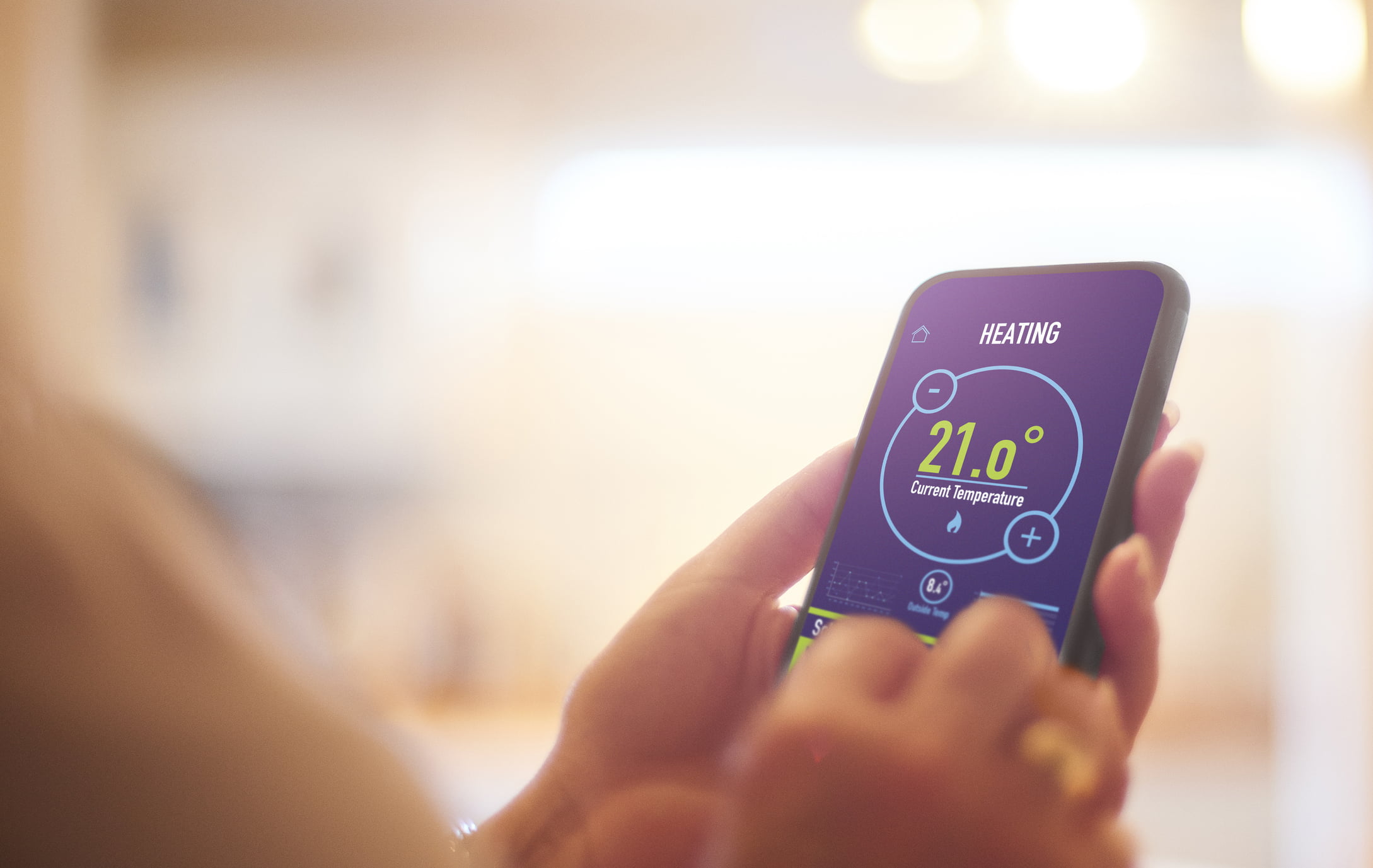
You can control your boiler via an app on your phone. These smart heating controls connect to the internet, letting you access and adjust them remotely.

One advantage of a smart heating control system is that you can make changes remotely if your plans change. This is useful if you’re going to be home later than you thought, for example. You can use smart heating controls to have your heating come on later so you’re not heating an empty home.

Some smart heating controls can learn what temperature you like and how quickly your home warms up to adjust settings to minimise energy use. This can need very little input from you once the system has been set up, making it a convenient option.

Someone using a thermostat via an app on their smart phone.

Keep your boiler or heat pump serviced

We recommend getting your boiler or heat pump serviced every year to make sure it’s running properly. The cost of a service will vary depending on where you live and how much work is needed. This will help make sure your system is running at its most economical.

Renting your home? Your landlord should arrange and pay for the service. They also have to provide gas safety checks for your boiler and all other gas appliances.

Get the latest energy saving advice straight to your inbox

Sign up to Energywire, our monthly newsletter full of news, advice and tips on energy saving and renewable energy options.

Sign up to our newsletter

Categories:

Last updated: 28 October 2026