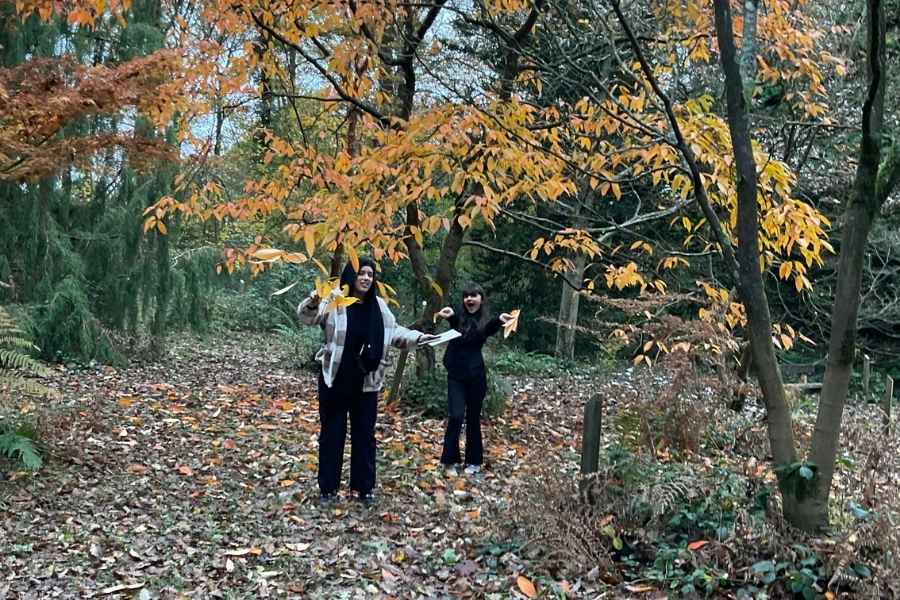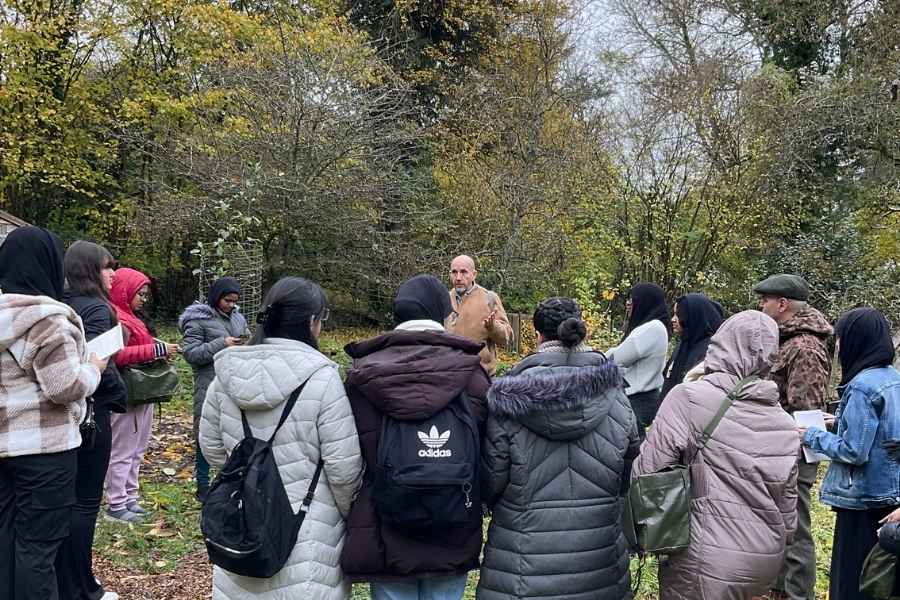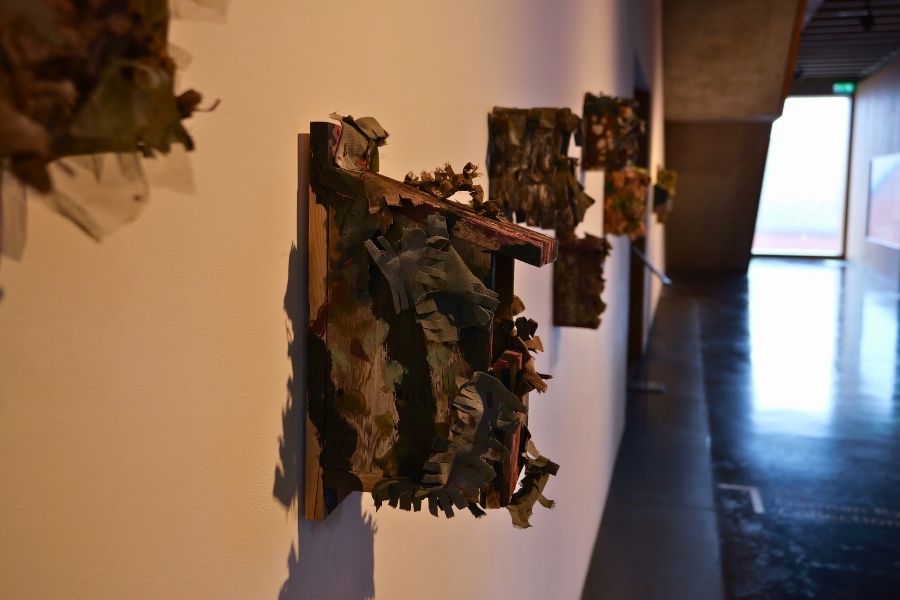
“I decided very young that I was an artist and I’ve spent my whole life investigating what that means,” says Stephen. “I think the artist’s perspective can be quite special because it lets people equip themselves to deal with things, rather than you just giving them a solution to something. The climate crisis, before it was even called a climate crisis, was something that I was painfully aware of, so I had to change my practice.”
Stephen’s journey led him to work with schools as an educational artist, integrating creativity into lessons to help young people make sense of climate change. His work now focuses entirely on building relationships between young people and their environment.
Stephen observes that, in his lifetime, “the choice to change is greater than it’s ever been, but the change has been virtually zero. If anything, we’re worse off now than we’ve ever been, despite the fact we have huge attitudinal change. So what’s the gulf between attitudinal change and behavioural change? There’s something missing. How can somebody want things to be better and then actually be an agent in making it worse?” He concludes that “we’re not feeling it. We’re just not feeling it, and that’s the job of the artist.”