
Green Mentor, Handsworth Association of Schools Birmingham, England

More than a trend: green influencing is raising climate consciousness across Birmingham

“Animals are affected by what humans do without realising and I hope we can help them and help ourselves get better at helping them,” says Rida, a secondary school pupil and Green Influencer. “I hope the impact we’re trying to make gives people a positive view on what we’re doing so they can get influenced by it. I hope others will come and say, ‘we want to be a part of this as well’, and they’ll do their part to help.”

Rida goes to school just north of Birmingham city centre in Handsworth, a small and culturally rich neighbourhood. Here, artist and Green Mentor Stephen Whitehead helps young people connect emotionally and practically with the environment. He founded the Green Influencers programme at the Handsworth Association of Schools.

Handsworth Association of Schools logo

The choice to change ‘greater than it’s ever been’

“I decided very young that I was an artist and I’ve spent my whole life investigating what that means,” says Stephen. “I think the artist’s perspective can be quite special because it lets people equip themselves to deal with things, rather than you just giving them a solution to something. The climate crisis, before it was even called a climate crisis, was something that I was painfully aware of, so I had to change my practice.”

Stephen’s journey led him to work with schools as an educational artist, integrating creativity into lessons to help young people make sense of climate change. His work now focuses entirely on building relationships between young people and their environment.

Stephen observes that, in his lifetime, “the choice to change is greater than it’s ever been, but the change has been virtually zero. If anything, we’re worse off now than we’ve ever been, despite the fact we have huge attitudinal change. So what’s the gulf between attitudinal change and behavioural change? There’s something missing. How can somebody want things to be better and then actually be an agent in making it worse?” He concludes that “we’re not feeling it. We’re just not feeling it, and that’s the job of the artist.”
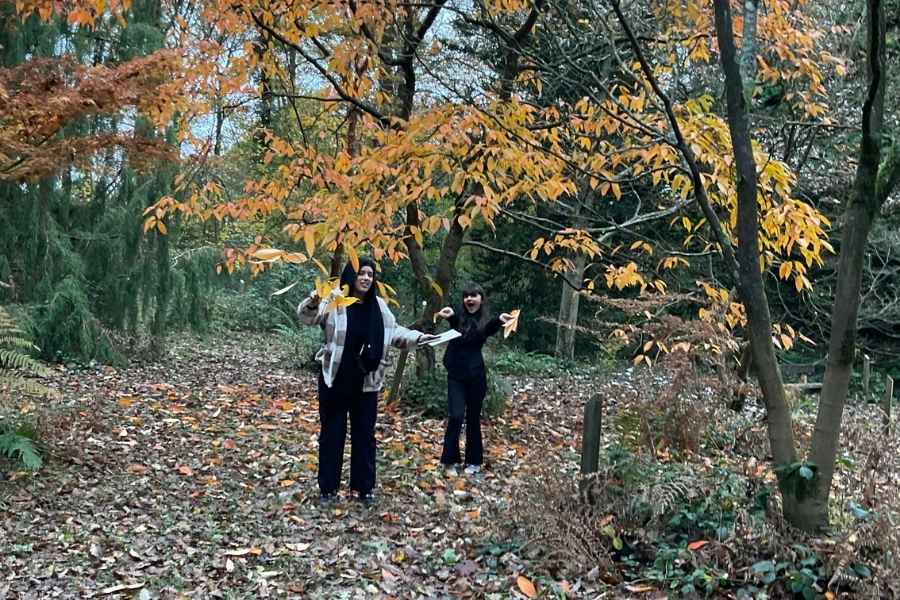
Two people standing in the woods beneath a tree.

A creative approach helps pupils connect with climate action

The Green Mentor programme uses art and creativity to equip young people with emotional, psychological, intellectual and practical tools. These tools will help create change within themselves, their peers and their communities.

“I think it’s genuinely life changing for the people that we work with. It’s about getting them to a stage where they independently want to do these things, and I think that’s where the massive changes will happen.”

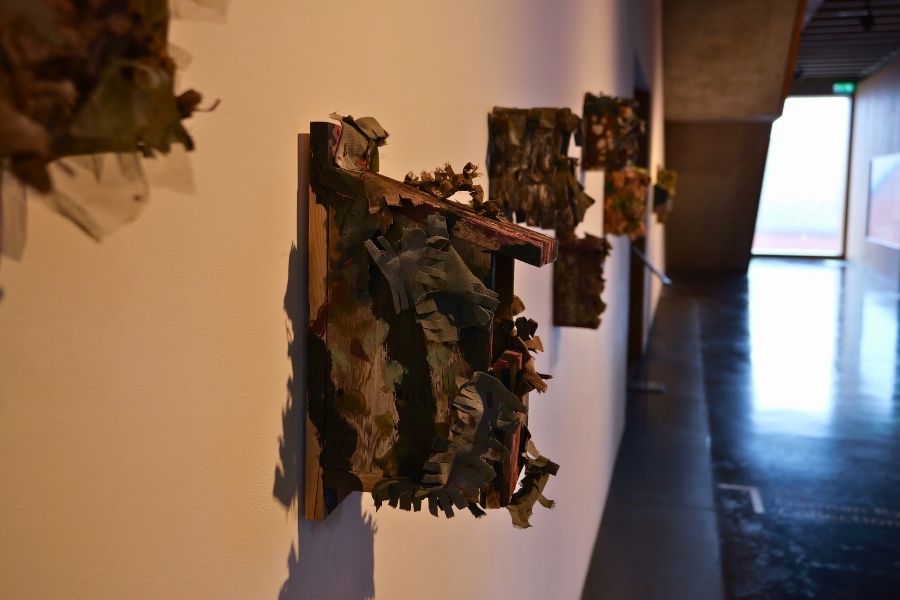
Stephen uses a ‘heart, head, hands’ approach. The process begins with developing empathy for nature. The children create a buzz in the New Art Gallery Walsall, where they’ve built a large den and paint each other’s faces to reflect the animals they want to embody. Previously, they decorated bird boxes designed to protect birds, which sit in an exhibition corridor at the gallery.

One girl explains: “when they painted my face like a fox, it made me think about what it must be like to live in the woods and how our actions affect their homes.”

It was amazing to see so many people interested in what we had to say and made me realise our small actions can make a big difference. Green Influencer Handsworth Association of Schools

Feeling nature first through the ‘heart, head, hands’ approach

After empathy comes carbon literacy and critical thinking, followed by practical action.

“Yesterday, I was teaching two half hour sessions of carbon literacy. Even with the same year group, each class was totally different,” says Stephen. “My ability to respond authentically comes from a deep personal connection to the work. And then, without action, you haven’t actually achieved much. If you can do even a little something to make things better, that also helps you.” He believes this process builds “collective intelligence that can come into play if you stop just being a teacher and you actually be a co-learner.”

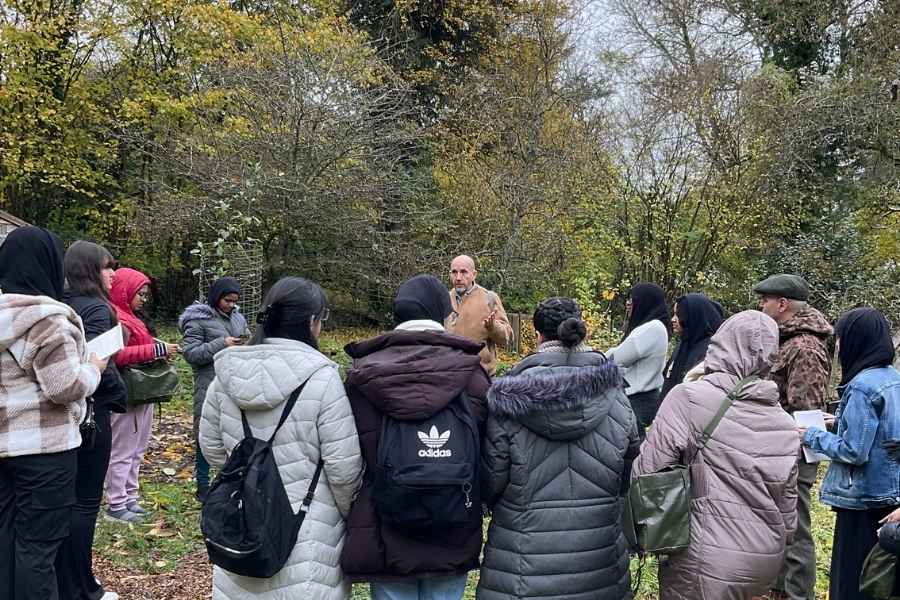
A group of people in coats ather around a central speaker in a woodland clearing on a fine day.

Meeting experts and sharing their work with the public

The final stage is integrating communities.

“I’ve changed the way I live my life to be more environmentally friendly, and also influenced other people to do the same,” says one Green Influencer. “I hope that other people can be influenced by our actions and maybe take part in what we’re doing.”

“You’re going to get burnout unless you have community,” Stephen adds. He stresses the importance of shared purpose. “Psychologists have found that when you know other people care as much as you care, you push yourself even further.” When he asked schools to advertise for pupils who cared about the environment, “They didn’t have to be knowledgeable. They just had to care.”

Stephen and the new group started with the heart. “The very first thing we did was we went out into the woods, to a yurt with a log burning stove. We all ate together and we walked through the woods together, no particular purpose, just being in nature. The idea is to get them to and feel connected to nature but also be more connected to one another.”

Next came the head. The group spent a day in London meeting a climate scientist and visiting an exhibition by The Great Imagining and House of Fairytales to deepen their carbon literacy.

“We also had a link with some activists in Uganda and we did a livestream with them while they were at one of the COP gatherings. After that, we went to Cannock Chase, and they built the ‘hands’ and community side. They shared the project and its purpose with the general public, and 2000 people came. They felt supported, and they felt that their voice was important.”

One Influencer recalls, “it was amazing to see so many people interested in what we had to say and made me realise our small actions can make a big difference.”

“For me, being a Green Influencer means having an impact on life and nature,” adds another. “It’s in our name, Green Influencers: we need to show the world what they’re doing and what they should do to make it better.”

I've changed the way I live my life to be more environmentally friendly, and also influenced other people to do the same. Green Influencer Handsworth Association of Schools

Growing confidence, community and climate leadership

While measurable wins like reduced carbon footprints matter, Stephen says the deeper impact lies elsewhere.

“We can’t think of this as being purely goal-oriented. You have to think of it as just a journey that you’re on. It’s good to know that the typical carbon footprint of Europeans is 13 tons and of Africans it’s five. But we don’t want to compare individual to individual and somehow make it a competition.”

Consistent funding is essential, he adds. “It’s all about consistency. The Energy Saving Trust Foundation has, through this funding, given me another two years. If I can keep that consistency, I can develop big projects and have a safe space to operate from so I can do good work. Working for an Association means I can speak directly with headteachers across 23 schools. The grant means I can just get on with my job.”

A decorated birdbox mounted on a wall.

How consistent funding keeps long-term change possible

Stephen sees himself as a socially engaged, relational artist. “I need to make sure that my work is socially relevant, that I’m of use to society.

Art needs to be relevant. If I’m an artist, not dealing with climate, then what am I doing with myself? It’s my job to not only point out the probable, but also the possible.”

Stephen paints a stark picture of a future where art loses its meaning. “Why would I bother painting something that’s not going to exist in twenty years’ time because it’s going to be burnt for fire and the gallery is now an emergency shelter for climate refugees?

“Instead, we can create together a new art practice that transforms us culturally into communities that are resilient to climate change and directs us to a sustainable way of life.”

They didn't have to be knowledgeable. They just had to care. Stephen Whitehead Green Mentor, Handsworth Association of Schools

Find out more about the work that Handsworth Association of Schools is doing.

Last updated: 3 March 2026