Case study

Plumbing and Renewables Ltd: growing a low-carbon installation business in rural Scotland

Plumbing and Renewables Ltd has grown from a traditional heating business into a renewables specialist. By focusing on clean technologies and upskilling its team, the company is helping drive Scotland’s low-carbon future.

Location notice

Please note that this page contains information and links most relevant for people living in Scotland.

Plumbing and Renewables Ltd, based in Moray, is proving how a local heating business can successfully switch to renewable energy and grow.

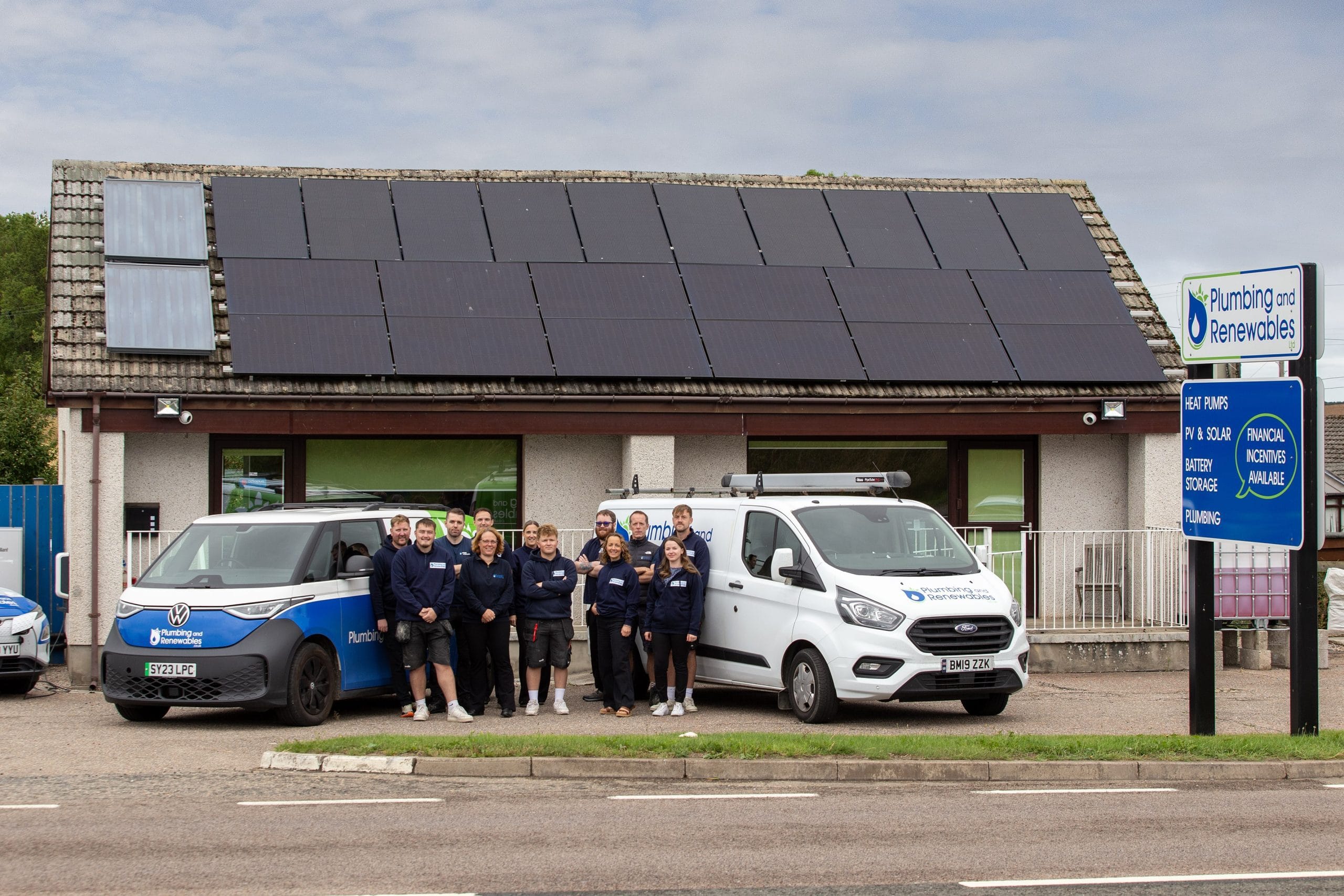
Over the years, Plumbing and Renewables Ltd has gradually moved away from traditional heating systems to focus on providing cleaner, low-carbon alternatives like heat pumps and solar panels. Since starting in 2007, the company has expanded its services across Inverness, the Highlands, and Aberdeenshire. We spoke to director Jill Paterson about the company’s journey to becoming a renewable technology specialist. Here is their story.

Group in uniform outside building with solar panels and company vans, under

Background

Originally set up as a general plumbing and heating business by directors Mark Galbraith and Jill Paterson, Plumbing and Renewables Ltd took its first step into renewables in 2012, installing solar thermal systems. By 2014, the team had gained MCS certification for biomass systems, and later added air source heat pumps in 2016, then ground source systems in 2017. Most recently, in 2023, the company became MCS certified in solar PV and battery storage.

They saw the industry changing and decided to adapt early. The company stopped installing oil and gas systems several years ago and now focuses fully on clean heat and low-carbon technology.

“We were already operating in renewable heat with biomass and solar thermal, so moving into heat pumps felt like a natural step.”

Today, heat pump installations make up around 60–65% of its business, with air source systems especially in demand.
Training and upskilling

Plumbing and Renewables Ltd now employs 18 people, including three apprentices, and has grown steadily over the years.

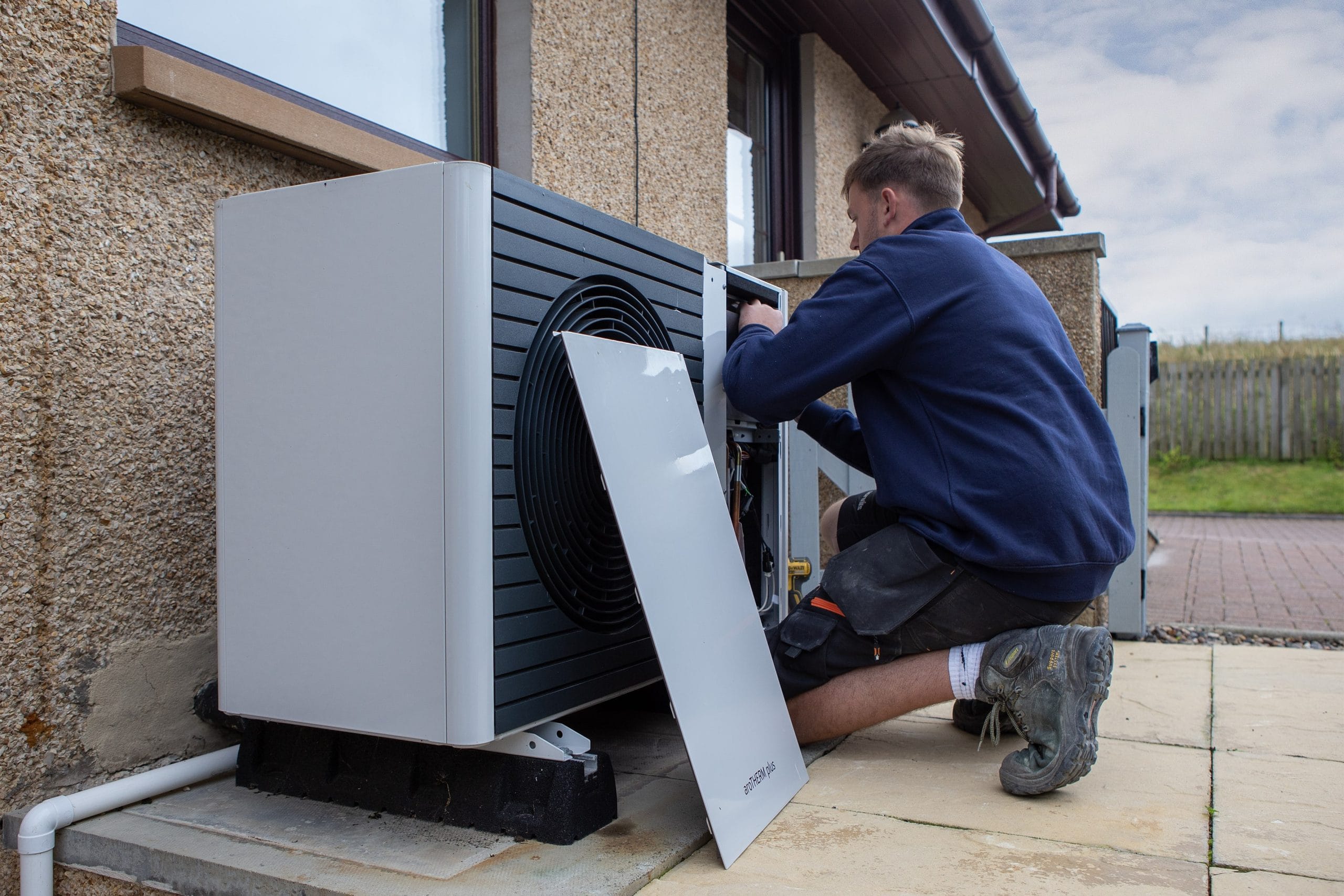
Training and learning new skills are a big part of how the company works. All engineers complete manufacturer-led training, and some go on to gain additional qualifications such as BPEC, helping the company meet MCS standards. By taking part in training like Heat Geek, they make sure their knowledge stays current, and they can keep offering the best advice and most up-to-date solutions.

The team is proud of its apprentice programme, seeing it as an investment in the future of the industry. While training apprentices can be expensive, many have stayed with the business long-term.

Plumbing and Renewables Ltd engineers are multi-skilled, able to design and install full systems and the company works on both retrofit and new-build projects, typically focusing on one-off homes or small developments rather than large-scale housebuilding.

Technician kneeling outside, working on a heat pump unit

Working across rural Scotland

Operating in remote parts of Scotland brings its own challenges. Customers can live hours away, so the team often uses remote diagnostics to avoid unnecessary travel. Supply chain issues can also be more difficult in rural areas, so the company works closely with local suppliers to ensure quick access to parts.

Despite having no dedicated marketing team, the business continues to grow thanks to strong word-of-mouth and a solid local reputation.

Challenges facing the industry

Despite its own success, Plumbing and Renewables Ltd are mindful that many businesses still face challenges when it comes to renewables.

Heat pump systems can be expensive to install, and government funding schemes can change, which makes things uncertain for both installers and homeowners.

Jill explained that it can be hard to plan ahead when funding isn’t guaranteed, with small businesses particularly affected if they suddenly lose grant funding. Jill believes that better communication from government and more stable, long-term support are needed if the sector is going to grow fast enough to meet net zero targets. She also highlighted how important it is to help the public understand clean heat technologies:

“There’s huge opportunity out there, but the public need to be properly educated and they’re not really, currently.”

Looking to the future

Plumbing and Renewables Ltd is a great example of how a business can thrive by committing to clean heat and investing in its people. Its story shows how important it is to train staff, deal with challenges, and earn customers’ trust.

The company encourages other installers to build their skills, train the next generation, and stay connected to their local communities, all of which are vital for creating a successful low-carbon future.

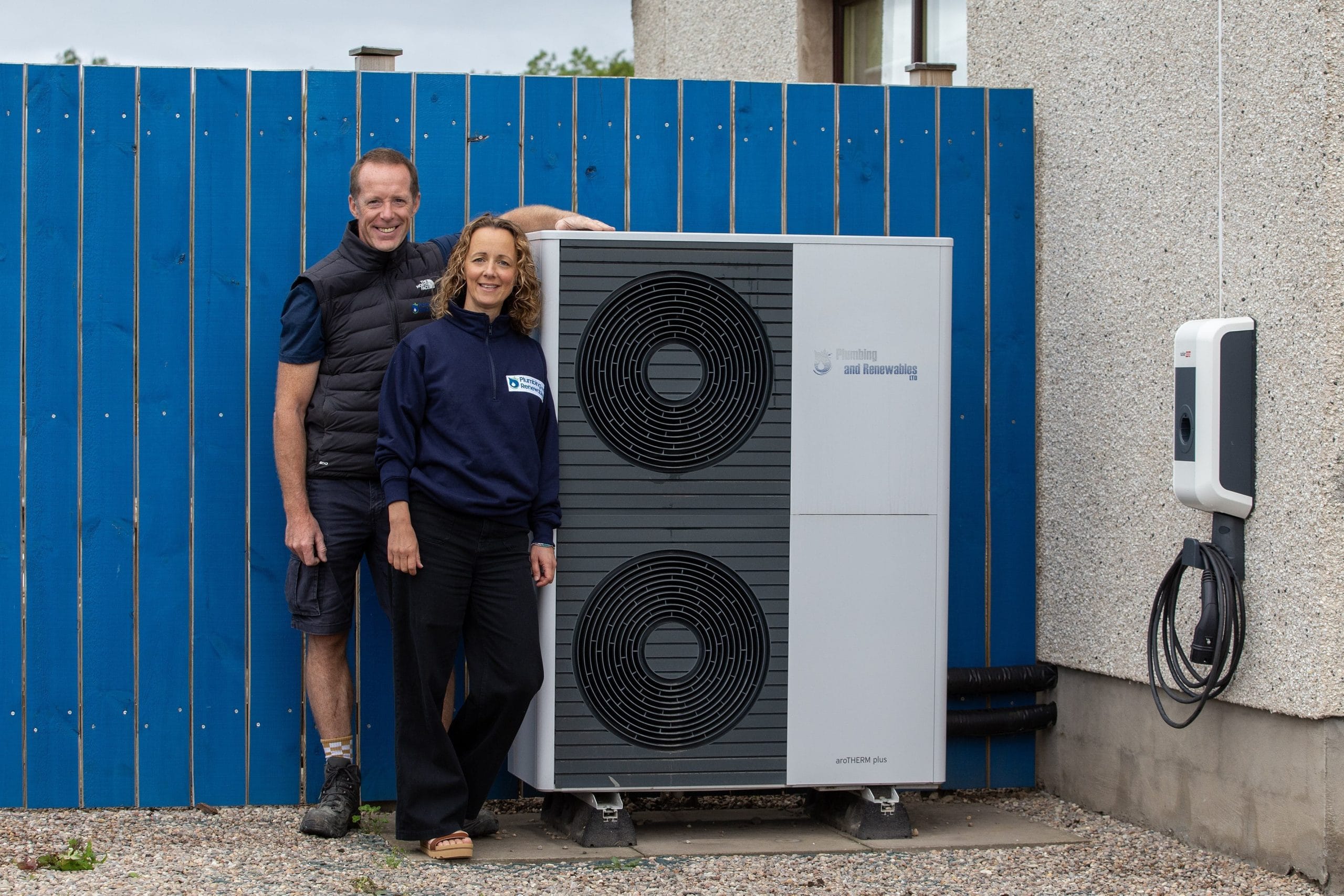
Two people beside a large heat pump unit outside a building.

If you’re thinking of making the move to installing green heat technology, explore the resources available on our Green Heat Installers support page, and our insulation and heat pump toolkits.

For more support, reach out to our team at [email protected].

Last updated: 24 September 2025