Advice

How to improve your home’s ventilation

Andrew Northcott
Reviewed by
Andrew Northcott
Knowledge Manager

Ventilation is where stale and polluted air from indoors moves outside, and fresh outdoor air moves in to replace it. There are many ways to do this, from opening a window to installing an extractor to do it for you.

It’s important to have proper ventilation in your home to maintain air quality, which is good for both your home and your health.

Ventilation is about the controlled movement of air. This is different from draughts, which are uncontrolled and can let in too much air from outside.

Let’s look at ventilation in more detail, from the benefits of good air quality to improving ventilation in your home.

Why is home ventilation important?

Having good ventilation in your home is important because it:

  • Improves air quality.
  • Lowers the risk of condensation, damp and mould.
  • Protects the building from structural problems caused by damp and rot.
  • Lowers the amount of pollution in the air.
  • Lowers the risk of respiratory problems such as asthma.

Ventilation is important in every home. And it’s even more important if your home has energy efficient upgrades such as:

While these upgrades make your home more energy efficient, they also make it more ‘airtight’. This means it’s harder for stale air to leave the building and for fresh air to get in, so you may need extra ventilation.

It’s also important to make sure there’s good ventilation in rooms where there’s likely to be more moisture or pollutants in the air. This includes:

  • In the bathroom while you’re bathing or showering.
  • In the bedroom while you’re sleeping.
  • In the kitchen while you’re cooking.
  • In any room where there are lots of people.

What affects air quality in a home?

These substances can be harmful depending on how much of them there are in your home:

SubstanceMain sources
Water vapourBreathing, cooking, showering, bathing
Carbon dioxide (CO₂)Breathing, gas cookers
Carbon monoxide (CO)Gas or oil-fired heating, wood burners, gas cookers
Particulate matterGas cookers, wood burners, smoking, vaping
Nitrogen dioxide (NO₂)Gas cookers
Volatile Organic CompoundsConstruction products, paints, toiletries, fragrancies and cleaning products
RadonNatural occurring gas from the ground
Airbourne virusesCoughing, sneezing
Poor quality external airOutdoor smoke, traffic fumes
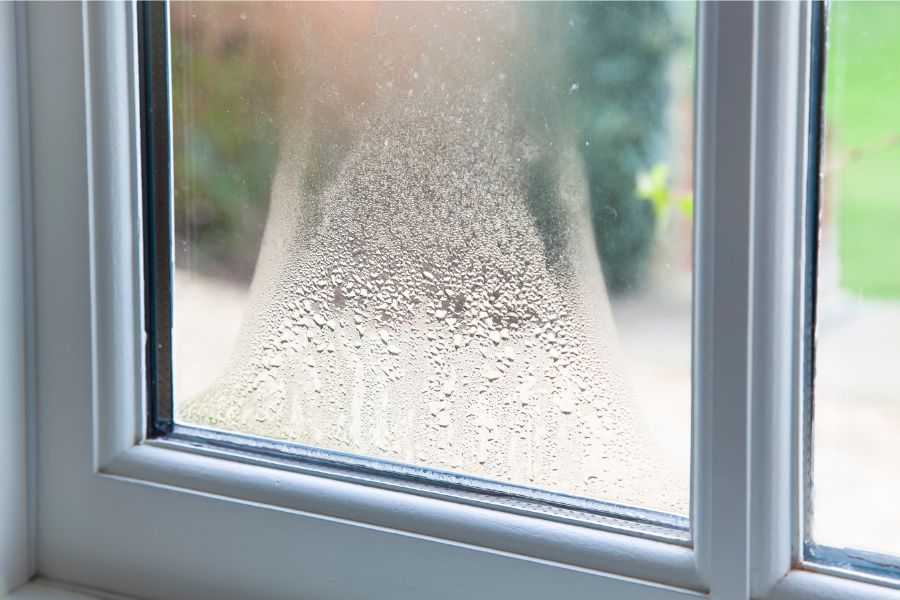
Condensation on a double glazed window.

How can I tell if my home needs better ventilation?

These are some signs that your home needs better ventilation. But it’s worth remembering that many pollutants don’t give off any noticeable signs like colour or smell. So, just because you can’t see or smell a problem, doesn’t necessarily mean your home has good air quality.

Signs your home needs better ventilation include:

  • Ongoing condensation problems.
  • Problems with mould.
  • Strong smells that take a long time to go away.
  • High readings from moisture and air quality monitors.

What are the different types of ventilation?

Here are the main types of ventilation:

  • Opening doors and windows to let air circulate naturally.
  • Using trickle vents and wall vents to let in small, controlled amounts of air.
  • Intermittent extract ventilation: Bathroom extractor fans and cooker hoods that you can switch on and off to extract air while bathing or cooking.
  • Continuous extract ventilation: Mechanical ventilation systems that continuously extracts air from the home.
  • Heat recovery ventilation: Continuous extraction systems that uses the heat of the extracted air to pre warm the fresh, incoming air.

You should also have gaps underneath your internal doors let air circulate around your home. The gap should be 10mm between the bottom of the door and the top of the carpet or flooring.

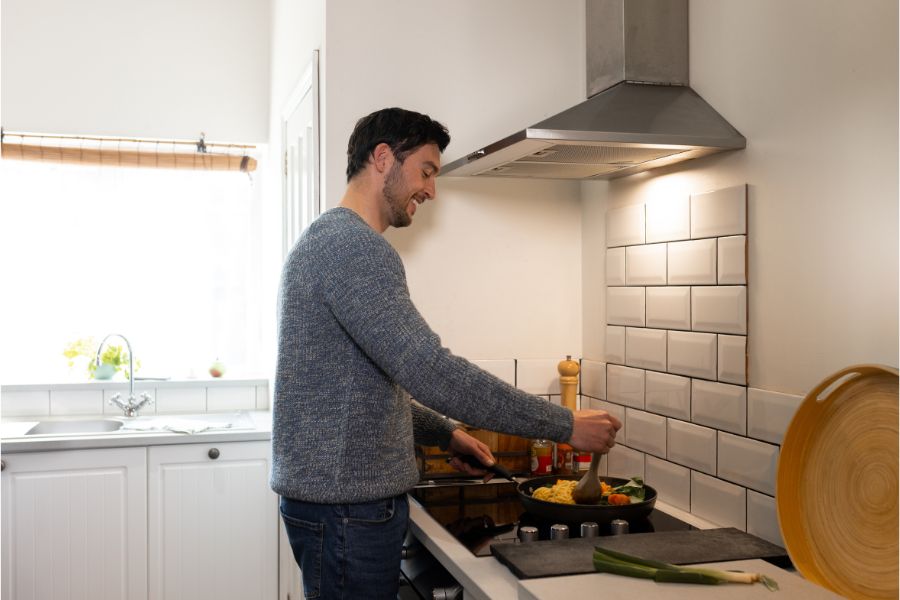
Man in kitchen cooking food on the rear hob while using the cooker extractor hood.

How do I improve my home’s ventilation?

Here’s how you can manually improve your home’s ventilation:

  • Keep your trickle vents open all the time.
  • Use extractors when cooking or washing.
  • Keep a window open when using a wood burner or open fire.
  • Open windows to boost ventilation.

These recommendations might not apply if you already have a mechanical ventilation system in your home that supplies and extracts air continuously. Check the instructions for the system or speak to your installer.

Did you know?

  • Using windows to boost ventilation is a common practice in Germany known as stossluften, or ‘shock ventilation’. This is where the windows in the house are opened wide for a few minutes. Doing this can create a good airflow throughout the house that helps shift stale air and replaces it with fresh air.

How do I ventilate a room in winter without losing heat?

Ventilation is just as important in winter as it is in summer. You should keep trickle vents open all year round, even during the colder months. If you close them to stop cold air coming in, make sure you open them up again as soon as you can.

You should also open windows at least two or three times a day for at least five minutes, even in cold weather. Aim to open a few windows at the same time on different sides of the building.

While it’s true that some warm air will escape outside while you do this, most of the heat is stored in the structure of the house itself. The air in your home should quickly warm up again once you’ve closed the windows, so don’t worry about losing too much heat.

To minimise losing heat, prioritise opening windows on the sunnier side of the house. This lets in air that might be warmer than the shady side.

How does ventilation work with insulation and draught proofing?

Both home insulation and draught proofing are designed to make the house more ‘airtight’. This means that it’s harder for heat to escape the building, and stops unwanted air coming in.

Draughts may bring cold air through gaps and cracks in the walls, floors, around older doors and windows. But many homes are already fairly well draught proofed. In this case, trying to ‘plug every gap’ may actually lead to poor air quality where moisture and indoor pollutants could rise to harmful levels.

Draughts often make you feel cold because they often bring cold air in at floor level. Ventilation, however, is designed to avoid this by bringing in air at higher levels. This is why trickle vents are usually at the top of windows. Good ventilation will distribute fresh air around the house, improving air quality throughout and avoiding causing a cold draught around your feet.

So insulation or draught proofing improvements need to be accompanied with proper ventilation to make sure that fresh air can come into the house.

When installing any kind of insulation or draught proofing, speak to the installer about what ventilation measures they’re considering as part of the design.
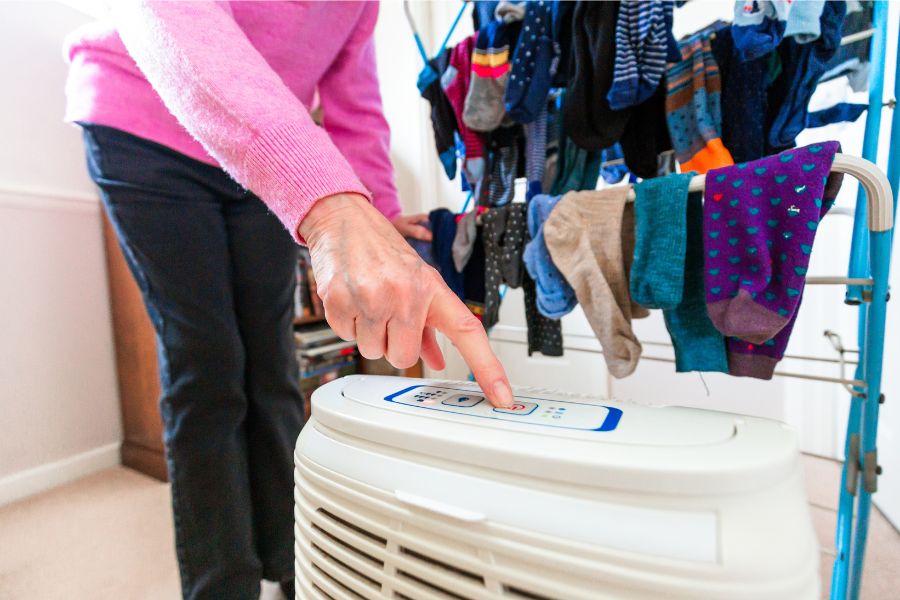
Woman switching on dehumidifier while drying laundry at home.

How else can I improve my home’s air quality?

You can improve your home’s air quality by:

  • Reducing sources of pollution in the home.
  • Getting an air quality monitor.
  • Using a dehumidifier.
  • Switching to an electric cooker.
  • Using an air purifier.

Do house plants help with air quality?

It’s well known that plants absorb and release CO2 as part of their natural processes. This can help improve your carbon footprint a small amount. But plants can also help lower indoor air pollution levels, particularly NO2.

You’d need a lot of plants to make any noticeable difference in your home’s levels of CO2. And, since plants can increase moisture in the air, it could lead to dampness in the home. But having some greenery in the home can still help boost your overall wellbeing.

Who can help me improve my home’s ventilation?

If you’re renting your home, speak to your landlord in the first instance. This is especially important if you’re dealing with problems with damp or mould.

For mechanical ventilation systems, speak to a ventilation specialist. For extractors and cooking extractors, speak to an electrician.

Trickle vents must be fitted to new windows as part of Building Regulations, so speak to a window installer for more information.

Adding a trickle vent to an existing window risks damaging the window and frame. Instead, consider speaking to a ventilation specialist to install a wall vent.

For all installation work, we recommend getting quotes from at least three installers who are certified with TrustMark – a government-endorsed quality scheme.

If you’re having any energy saving improvements done to your home, ask the installer about what ventilation measures they plan on adding.

Get home energy advice straight to your inbox

Sign up to our monthly newsletter Energywire to stay up to date with the latest energy advice and news.

Latest blogs

Go to blog

Heat pump tumble dryers and the new tumble dryer energy labels in Northern Ireland

20 May 2026

New energy labels for tumble dryers came into effect in Northern Ireland on 1 July 2025. Here’s what you need to know.

Measure, Plan, Act: a practical framework for delivering Net Zero in business

17 April 2026

What is Measure, Plan, Act and how can it help get you to corporate net zero?

Moving house energy checklist

1 May 2026

You should give your energy supplier at least 48 hours’ notice before you move. We walk you through what to do before…

Last updated: 11 December 2025