
Heat pumps

Air-to-air heat pumps

Andrew Northcott
Reviewed by
Andrew Northcott
Knowledge Manager
Joanna O’Loan
Reviewed by
Joanna O’Loan
Knowledge Manager

At a glance

  • Air-to-air heat pumps heat and cool your rooms using indoor and outdoor units.
  • They can be a good choice for smaller homes or flats.
  • Typical cost: about £1,900 for one room, around £3,700 for a three-bed semi-detached home.

Air-to-air heat pumps work in a similar way to the more common type of air source heat pump, an air-to-water heat pump. But, instead of heating water in radiators or underfloor heating pipes, they warm the air inside the building. 

Air-to-air heat pumps operate in much the same way as many air conditioning systems. Although air conditioning is commonly associated with cooling, many systems can also provide heating.

Is heating your home one of your main reasons for installing a system? If so, it’s important to choose one that is designed and sized to meet your heating needs.

Air-to-air heat pumps don’t usually provide hot water for your taps and shower. But there are several alternative options for heating water.

Here’s what you need to know about whether they’re right for you.

News: UK Government expands Boiler Upgrade Scheme to include air-to-air heat pumps

In November 2025, the UK Government announced an expansion to the Boiler Upgrade Scheme to include air-to-air heat pumps.

Grants for air-to-air heat pumps aren’t available yet, but will be in the future. We’ll update this guide when we know more.

If you’re eligible, you can get £2,500 off the cost of installing an air-to-air heat pump.

Air-to-air heat pumps use similar technology to many air conditioning systems, but only eligible air-to-air heat pump systems will qualify for funding.

Minister for energy consumers Martin McCluskey said:

“With heat pumps more popular than ever, we want to make sure as many people as possible can benefit, especially those in flats or small homes without central heating, so they have greater choice when upgrading their property.”

To qualify for the Boiler Upgrade Scheme, you need to have a Microgeneration Certification Scheme (MCS) registered system fitted by a certified MCS installer.

The Boiler Upgrade Scheme may not include all types of air-to-air heat pumps, but we expect the most common ones to be included. We will update this page when more information is available.

How do air-to-air heat pumps work?

Most UK homes use radiators to heat each room. Because they have water flowing through them, it’s called ‘wet’ central heating. One advantage of air-to-air heat pumps is that they don’t need a wet central heating system to warm your home.  

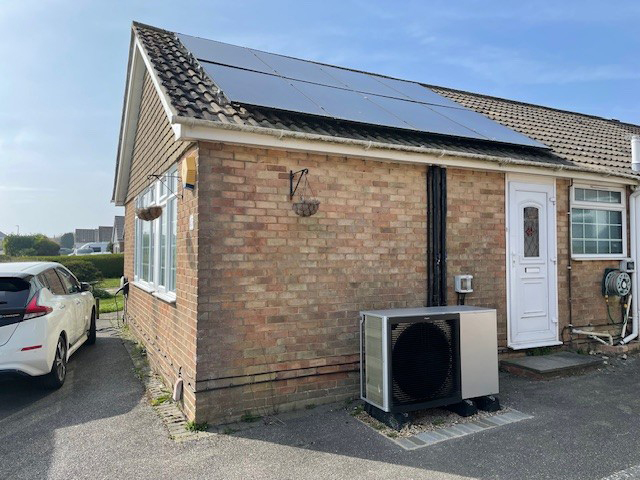
They usually have one unit outside and at least one unit inside with pipes carrying a refrigerant between the units. The indoor unit is usually high on a wall inside the room, as close to the external unit as possible. This reduces the pipework you need inside your home.  

The one outdoor unit can connect to more inside units but will need more pipework installed. Typically, these pipes run in a slim plastic channel around the upper edges of the room. 

It’s the same setup as air conditioning, which is more common in hotter climates. You can configure these units for cooling as well as heating. 

What types of air-to-air heat pump are there?

All in one systems

These systems are relatively new. You might hear them called ‘monobloc systems.’

One advantage of an all-in-one system is that it doesn’t need an outside unit: all components are in a single indoor unit. This makes them well suited in homes where it’s not possible to have an outside unit. This might be where there’s an outside wall but it’s not easily accessible for installation and servicing.

All-in-one systems connect to the outside air through two small ducts that pass through an external wall. One duct draws in outside air to extract heat from it, while the other duct removes the cooled air.

The ducts need only two holes about 15-20cm wide. This makes them much less visually obvious than the outdoor unit needed by other types of air-to-air heat pumps.

Ducted systems 

Ducted systems are ventilation systems that you typically see in energy efficient houses such as ‘Passivhauses.’ Some types of ducted systems are also known as exhaust air heat pumps, and can also supply hot water.

The heat pump warms the air in an air handling unit. The ducts move air around the house through pipes that are slim enough to be hidden inside the ceiling voids.

The heat pump for this system is roughly the size of a boiler and are usually installed in a loft or utility room. 

Ducted air-to-air heat pump systems can be more challenging to retrofit into older or larger homes, particularly where heating loads are high. This is because the ductwork required to distribute warm air can become large and difficult to accommodate.

What are the benefits of air-to-air heat pumps?

Suitable for smaller homes: air-to-air heat pumps can be a good choice for smaller homes and flats, especially where an air-to-water heat pump isn’t suitable. Outdoor units are typically smaller than air-to-water heat pumps. This smaller size can make them a good choice for small flats and homes with less outdoor space. All-in-one (monobloc) systems can also be a good choice for homes with no outdoor space.

Can cool your home: air-to-air heat pumps can provide cooling during warm weather. However, you should first consider passive cooling methods like window shades and improved ventilation to minimise energy use.

If your home overheats in summer despite these measures, speak to your installer about setting your heat pump for cooling as well. This lets you to maintain comfortable temperatures all year round while managing your energy costs.  

Improves your carbon footprint: unlike gas and oil boilers, air-to-air heat pumps are a low carbon heating system that takes heat from the outside air when in heating mode. This will improve your home’s carbon footprint.

What are the disadvantages of air-to-air heat pumps?

  • Indoor units can be noisier than other heat pumps. 
  • You’ll usually need to install new pipework when installing multiple indoor units. 
  • They don’t blow fresh air into the room: they recirculate the existing air. You’ll still need to ventilate the house just as you would with other types of central heating.

Is an air-to-air heat pump right for me? 

Air-to-air systems are more often installed in smaller properties, but it’s possible to install them in in larger homes.

This type of heat pump is more common elsewhere in Europe. This is partly because of the warmer climate, where they’re useful for cooling as well as heating. 

There are a few questions you should ask yourself before you decide if it’s right for you:

Do I have somewhere suitable to put it?

Most types will need an area outside your home for a unit to fit to a wall or on the ground near the house. The system will need space around it to get a good flow of air.

How will I heat my water?

Most air-to-air systems don’t provide hot water, so you’ll probably need to choose another way of heating water for showering, bathing and hot taps. Consider the amount of hot water your household needs, as well as any space or budget considerations. The options include: 

  • A hot water cylinder with an electric immersion heater. 
  • An electric shower and ‘point of use’ water heaters for hot taps.
  • A  air-to-air heat pump model that does heat to a hot water cylinder. There’s at least one manufacturer producing these now. 
  • Solar water heating, if you have enough space to install the solar hot water panels. You’ll need a suitable hot water cylinder, and you’ll need an electric immersion to provide enough hot water when there’s less sunshine.

How much does an air-to-air heat pump cost?

Our research shows that air-to-air heat pumps can cost around:

  • £1,900 to heat a single room
  • £3,700 to heat a three-bedroom semi-detached house

There may also be other costs to consider, such as redecoration.

There may also be other costs to consider, such as redecoration after installation.

Are there grants available for air-to-air heat pumps?

In England and Wales: you might be eligible for a £2,500 grant to help with the cost of installing an air-to-air heat pump through the Boiler Upgrade Scheme.

In Scotland: you might be able to get an interest-free loan or a grant to make your home more energy efficient.

In Northern Ireland: there isn’t a specific grant currently available but you can still ‘get heat pump ready’ and apply for funding for insulation via NI Energy Advice.

Will an air-to-air heat pump save me money?

There isn’t much data available on how air-to-air systems perform in the UK, so it’s difficult to know how much money you’d save. 

How much you could save depends on: 

  • What heating system you’re replacing. 
  • How the heat pump system is designed.
  • How efficiently you’re using it.

Ask your installer to estimate the running costs based on their design of the system for your home.

How do I get an air-to-air heat pump?

At present, there are no MCS-certified installers for air-to-air heat pumps, although MCS expects certification to be available before the end of 2026.

If you’d like to use the Boiler Upgrade Scheme to help fund an air-to-air heat pump, you’ll need to wait until MCS-certified installers become available. You’ll also need to wait until the scheme opens to eligible systems. When this happens, you can use their tool to find installers near you. We’ll update this page to reflect the latest information.

If you’re planning to pay for the installation yourself, you can still use an installer who is not MCS certified. Many companies that install air conditioning systems also install air-to-air heat pumps.

Is heating your home a key reason for installing the system? If so, it’s important to choose an installer with experience of designing systems to provide effective heating, not just cooling.

As with any major home improvement, it’s a good idea to get at least three quotes. This will help you compare costs, system designs and the installer’s experience.

Get our monthly newsletter for more advice

Sign up to Energywire, our monthly newsletter full of news, advice and tips on energy saving and renewable energy options.

Last updated: 20 October 2026