
Blog Post 21 January 2026

Are smart homes the key to a lower carbon footprint?

At a glance

  • Smart devices and apps can make managing your home energy usage easier.
  • Many tasks can be automated to make life easier, such as switching your heating on for when you come home.
  • Smart tariffs let you take advantage of cheaper energy prices.

Smart devices are great at making our lives more convenient. And with the ability to integrate devices with smart speakers, you can build routines to automate many household tasks.

Most of us have an idea of what a smart home of the future is like. A home that uses digital technology to make everything we do easier, and everything we want easier to get.

We may also have an idea of what a low carbon home of the future is like, and there’s probably some overlap between the two.

But how closely are they linked, and do we all need to invest in smart tech to reach net zero?

A smart future

You can now control your home’s appliances and systems using a smartphone, tablet or laptop via the internet.

A smart TV, for example, connects to your Wi-Fi, runs apps and operates other smart devices for you from a dashboard. But smart TVs still need to follow your instructions.

Many feel a truly smart home needs to go one step further with devices that talk to each other and respond intelligently to our inputs and behaviour patterns. Appliances like these would collect and analyse data and can ‘talk’ with each other. This is what people mean when they talk about the Internet of Things (IoT).

For example: a smart house would learn to dim the lights 15 minutes before you go to bed based on your typical nighttime habits.
Smart heating controls

Smart heating thermostats are part of a wave of ‘smarter’ products. They may be able to:

  • interpret what you input (eg your preferred room temperature)
  • learn from what you do (eg turn off your heating at a certain time)
  • react to other data like weather forecasts

Most smart heating controls link to your phone, but some know when you’re away from home. They might adjust the heating accordingly or send you a message so you can turn the heating off via an app. You might also be able to control your heating by telling your smart speaker what you want.

The cleverest systems will learn from how you set your heating, how you adjust it and how you occupy the home. They’ll start to predict your behaviour and heat your home differently as a result. Some smart thermostats have a ‘learning’ function that does this.

Most of these functions might reduce your energy use by turning the heating off or down when appropriate. But they could also increase your energy use by turning the heating on or up earlier, so you’re more comfortable but not cutting your carbon.

However, there are some functions that just make the system more efficient. These include load and weather compensation, which adjust the boiler flow temperature to maximise the boiler efficiency. You don’t have to have a smart thermostat to do this, but it’s probably the easiest way to add compensation to an existing system.

Smart meters

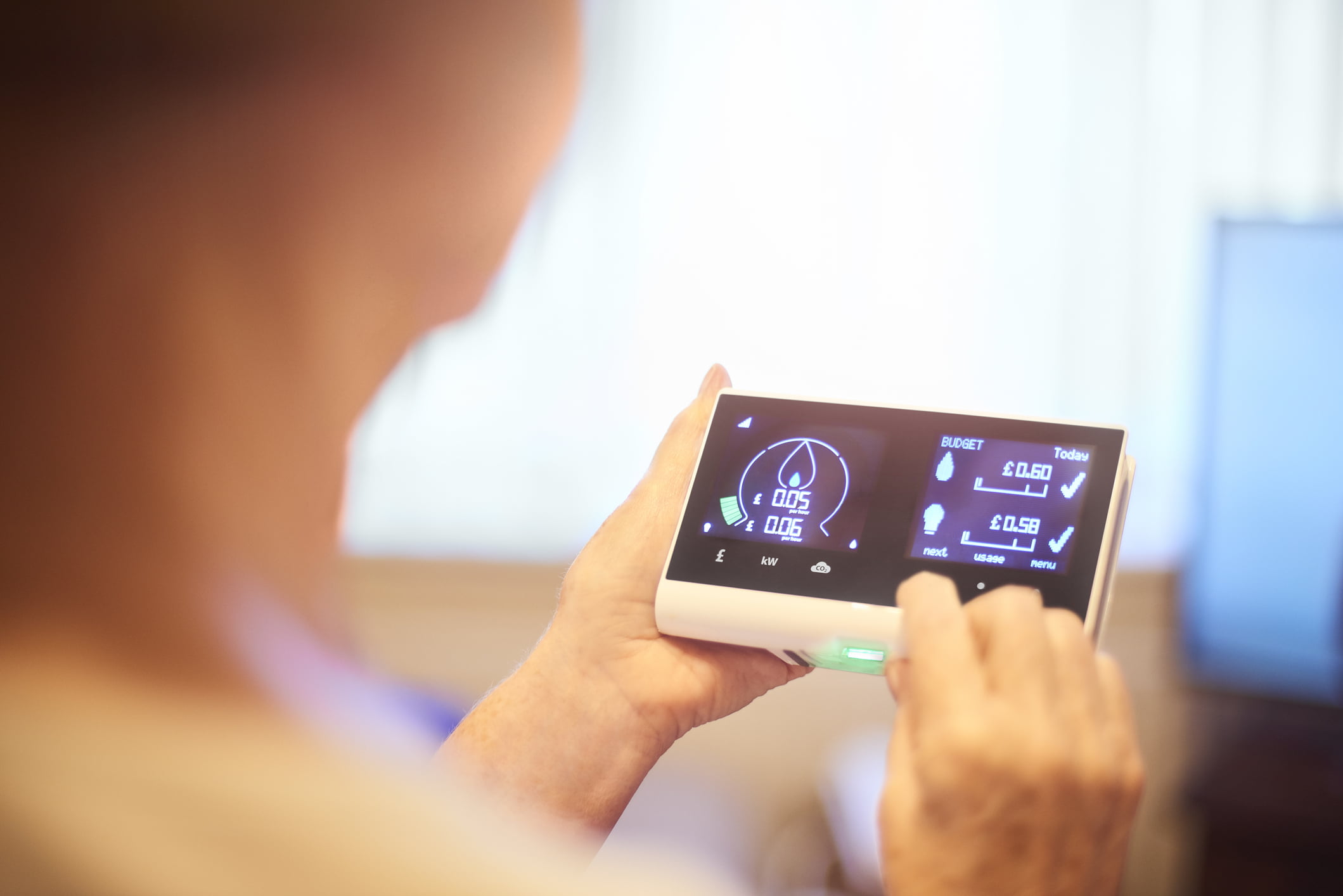
Smart meters measure how much electricity and gas you’re using and send this data directly to your energy supplier. You won’t need to give meter readings, and it means the end of estimated bills. You can also see real-time information about your energy usage via an in-home display unit.

The exciting bit isn’t the smart meter itself: it’s the smart things you can do once you’ve had one fitted. Most of the smart products we’re talking about here either need you to have a smart meter or could do more for you if you have one.

Having a smart meter also lets you take advantage of schemes like the Demand Flexibility Service, which offers rewards for customers who use less electricity during certain periods.

Smart appliances

A genuinely smart appliance will respond to new information and change its behaviour accordingly, for you or your home’s benefit.

A smart meter can show you the best time to use power, based on energy prices and the grid supply. This makes it ideal for running the dishwasher or drying the laundry at the most economical time.

Cheap, low carbon power is mostly available overnight, particularly the early hours of the morning. But most of us don’t want to get up in the middle of the night just to turn the washing machine on.

Smart appliances get told when there’s cheap and green power available and use this information to help them decide when to switch on. Your washing machine might turn on while you’re out and the dishwasher might start at 2am, all without you needed to programme them.

Smart appliances like this aren’t widely available in the shops yet. But the technology exists to roll them out as soon as the market for them develops.

Smart charging

Smart charging is a vital consideration for people with electric vehicles (EVs), or with a home battery system for storing solar energy. Your smart meter or your battery charger knows when the price of electricity is low, so you can charge during times that will cost less.

EVs are large, mobile batteries and could potentially offer a two-way movement of energy with a vehicle-to-grid (V2G) system. After charging the car when electricity is at its cheapest, the energy stored in the car battery could be used in the home or sold back to the grid at times of peak demand.

The technology to do this is pretty much ready to go. But negotiating the complexities of two-way grid connections and car manufacturers’ warranties is slowing down widespread use.

Smart tariffs

To benefit properly from smart appliances, electric vehicles and home batteries you need to be on a smart tariff.

This might be a simple tariff with cheaper electricity at certain set times of the day and higher prices during peak periods.

Octopus’s Agile Tariff goes a step further, with the price you pay changing every half hour in line with the changing wholesale price of electricity. This lets you take advantage of energy spikes produced by renewable energy sources on either very windy or sunny days.

And when there’s more electricity being generated than can be stored, some smart tariffs pay you to use up excess energy.

Agile tariffs are complicated to predict, and you’ll need smart charging or smart appliances to take advantage of one.

These tariffs mean you’re using electricity as it’s being generated, so it doesn’t need to be stored. This encourages greater use of renewable energy sources like solar and wind. Using a combination of smart tariffs and smart appliances, you’ll be helping to decarbonise the grid faster.

Find out more in our blog about balancing the grid with smart meters.

Smart lights

We all know that we should turn the lights off when we leave a room to save energy. This saves money too: around £8 a year in Great Britain (GB) or £9 in Northern Ireland (NI) on your electricity bills. But we all know this doesn’t always happen. 

But if all the lights in your home were smart bulbs and you could turn them off without going back to flick the switch, wouldn’t that save energy? And if your smart home realised there was no-one in the room and turned the lights off for you, surely that would save even more?

Well, not necessarily. Modern LED bulbs use very little power when they’re on – most domestic LEDs are less than 10 watts. Meanwhile, a smart bulb uses some standby power all the time whether it’s on or off. It does this so it can react when a signal comes from your phone, smart speaker or some other controller.

Standby power varies but it could easily be one watt per bulb. In this case, you could easily end up using more energy when the lights are off than when they’re on.

So, while it’s possible to save energy with a smart lighting system, the current domestic options aren’t designed to do this and usually won’t. You’re better off upgrading all your lights to LEDs, which saves you £45 in GB and £55 in NI a year.

Are smart devices worth it?

When it comes to reducing your energy costs, some smart devices are more helpful than others. It can be confusing trying to work out what helps and what will push your bills up.

But there’s great potential. As our homes get smarter and smart devices become more commonplace, we can expect smart home systems to manage everything the way we want it. That includes cutting your energy bills and carbon footprint.

Get the latest energy advice

Sign up to Energywire, our monthly newsletter, to get the latest energy news delivered straight to your inbox.

Sign up to our newsletter

Latest blogs

Go to blog

Heat pump tumble dryers and the new tumble dryer energy labels in Northern Ireland

20 May 2026

New energy labels for tumble dryers came into effect in Northern Ireland on 1 July 2025. Here’s what you need to know.

Measure, Plan, Act: a practical framework for delivering Net Zero in business

17 April 2026

What is Measure, Plan, Act and how can it help get you to corporate net zero?

Moving house energy checklist

1 May 2026

You should give your energy supplier at least 48 hours’ notice before you move. We walk you through what to do before…

Last updated: 21 January 2026