Blog Post 25 August 2026

Rooftop solar panel installation: a step-by-step guide

Joanna O’Loan
Reviewed by
Joanna O’Loan
Knowledge Manager
Andrew Northcott
Reviewed by
Andrew Northcott
Knowledge Manager

At a glance

  • There are a few things to consider before installing solar panels including which way your home faces.
  • Our solar panel calculator can help you get started.
  • Get three quotes from MCS-certified installers to get the best deal.

Installing rooftop solar panels is a great way to lower your energy bills and lower your carbon footprint. You can also sell extra energy you make, making them even more worthwhile. 

But if you want to put solar panels on your roof, where do you start? 

Our step-by-step guide will take you through the solar panel installation process from start to finish. This includes finding the right installer and what to expect on the day the installation happens.

What about plug-in solar panels?

If you’ve searched for “plug-in solar panels”, it’s important to know that this guide is about professionally installed rooftop solar panels. While plug-in solar systems may suit some homes where rooftop installation is not feasible, most domestic solar generation systems are professionally designed and installed.

The steps below explain how a rooftop solar installation happens.

News: how will the Warm Homes Plan impact solar panels?

The Warm Homes Plan is set to invest close to £15 billion in improving the UK’s homes to cut energy bills.

For people on low incomes, there’ll be fully funded government support to install solar panels.

There’ll also be low and zero-interest loans available for homeowners regardless of income.

We’ll update this guide when we know more.

For more information, read our blog on what the Warm Homes Plan means for you.

1. Decide if solar panels are right for you

The good news is that solar panels are suitable across the UK. They even work on cloudy days.

But some solar panel setups are more effective than others. Here are some important questions to ask yourself before installing solar panels:

Which direction does my roof face?

Solar panels generate the most electricity when they face south because they’re able to capture as much sunlight as possible. But there’s more to solar that just overall power output. 

South-facing panels might produce the most electricity overall, but that doesn’t mean solar isn’t worth it if your roof faces east or west. In fact, these roof directions can still generate a lot of electricity and may be a better match for when you use energy at home.

East-facing panels generate more electricity in the morning, while west-facing panels do better in the afternoon and early evening. So, if you tend to use more power during those times, you could make better use of your solar energy as it’s being produced. 

We don’t recommend installing panels on roofs that face north – you won’t get enough sunlight to make it worth your while. 

How much shading does my roof get?

Shading on solar panels usually comes from:

  • trees
  • chimneys
  • nearby buildings

While the direction your roof faces plays a role in how much electricity your panels can generate, shading can have an even bigger impact. For example, a south-facing roof that’s shaded during the day may generate less power than an east- or west-facing roof with full sun exposure.  

Solar panel installers will assess how shading affects your roof throughout the day and across different seasons. The goal is to avoid shaded areas as much as possible and place panels where they’ll get the most consistent sunlight. 

If shading is unavoidable, your installer might recommend microinverters or power optimisers. These let each panel work independently. So if one panel is shaded, it won’t drag down the performance of the whole system. 

If there are trees causing partial shade and it’s possible to trim them back, your installer may suggest that too. They should guide you based on what will make the most difference. 

How many solar panels can I fit? 

Generally, the bigger your roof, the more solar panels you can fit on it. And the more solar panels you have, the more clean, free electricity you can generate.

However, the number of panels you can install may be limited by:

  • the roof shape
  • chimneys
  • skylights
  • shading from nearby buildings or trees
  • local planning or conservation area requirements

Many homeowners choose to fit as many panels as their roof can fit. However, the final system size could also be influenced by local grid capacity and export limits. Your installer will assess this as part of the design process.

Here’s a rough guide to how many panels typically fit on different types of houses: 

  • Mid-terrace house: four panels 
  • End-terrace or semi-detached house: eight panels 
  • Small detached house: 12 panels 
  • Large detached house: 16 panels

2. Check your options for funding

There are no dedicated government grants for solar panels in the UK at the moment. But this might change as we find out more details about the UK Government’s Warm Homes Plan.

Solar panels might be included as part of a package of upgrades for certain financial support schemes. But these depend on where you live and whether you get any benefits. 

If you’re looking for help with the cost of solar panels, there are a few options available to you:

Energy supplier schemes 

Get in touch with your energy supplier and ask if they offer help with the cost of solar panel installation.

Some energy companies will offer solar panel funding if you sign up to one of their tariffs. So, if you’re able to switch energy supplier, you may be eligible for some financial help with your solar panels.

Solar panel subscriptions 

Some installers let you spread the cost of solar panels (with or without battery storage) over a number of years with low or zero interest. There may also be finance options available from your local authority, banks or other financial organisations.

Whether these options are right for you will depend on your circumstances. Always check the terms and conditions carefully and consider speaking to an independent financial adviser if you’re unsure before signing up.

3. Find a solar panel installer

We recommend you look for solar panel installers who are certified by the Microgeneration Certification Scheme (MCS).

MCS is a government-backed quality scheme that ensures installers are qualified and work in line with the scheme’s standards.

You can find MCS-certified installers near you using its ‘find an installer’ tool. Search using your postcode or your region. Under ‘what would you like installed’, select ‘Solar PV’ to find solar panel installers.

We recommend getting quotes from at least three different installers to make sure you’re getting the best value.

Your solar panels being installed by an MCS-certified installer may be a requirement to sign up for export tariffs.

4. Design and planning

Before installation, an assessor will come and look at your roof to make sure it’s safe to hold the solar panels. They’ll also design your solar panel system to make it as efficient as possible, based on your roof setup and how much space you have. 

Most homes don’t need planning permission to install solar panels. But you may need it if your home is: 

  • a listed building 
  • in a conservation area 

If you’re not sure, check with your local planning office. 

This is also the time to ask the right questions and make sure you understand what you’re signing up for. Getting multiple quotes is a great idea and so is asking each installer to explain their approach. Here are a few questions to consider asking each installer: 

  • What electricity price are you using to estimate savings? 
  • How much of the energy will I likely use myself vs. export to the grid? 
  • How are you accounting for shading or roof orientation? 
  • What warranties do you offer — for the panels, inverter, and installation? 

Taking time to understand the details can give you confidence that you’re getting a system that genuinely fits your home and lifestyle.

5. Installing the solar panel system

The day has arrived! 

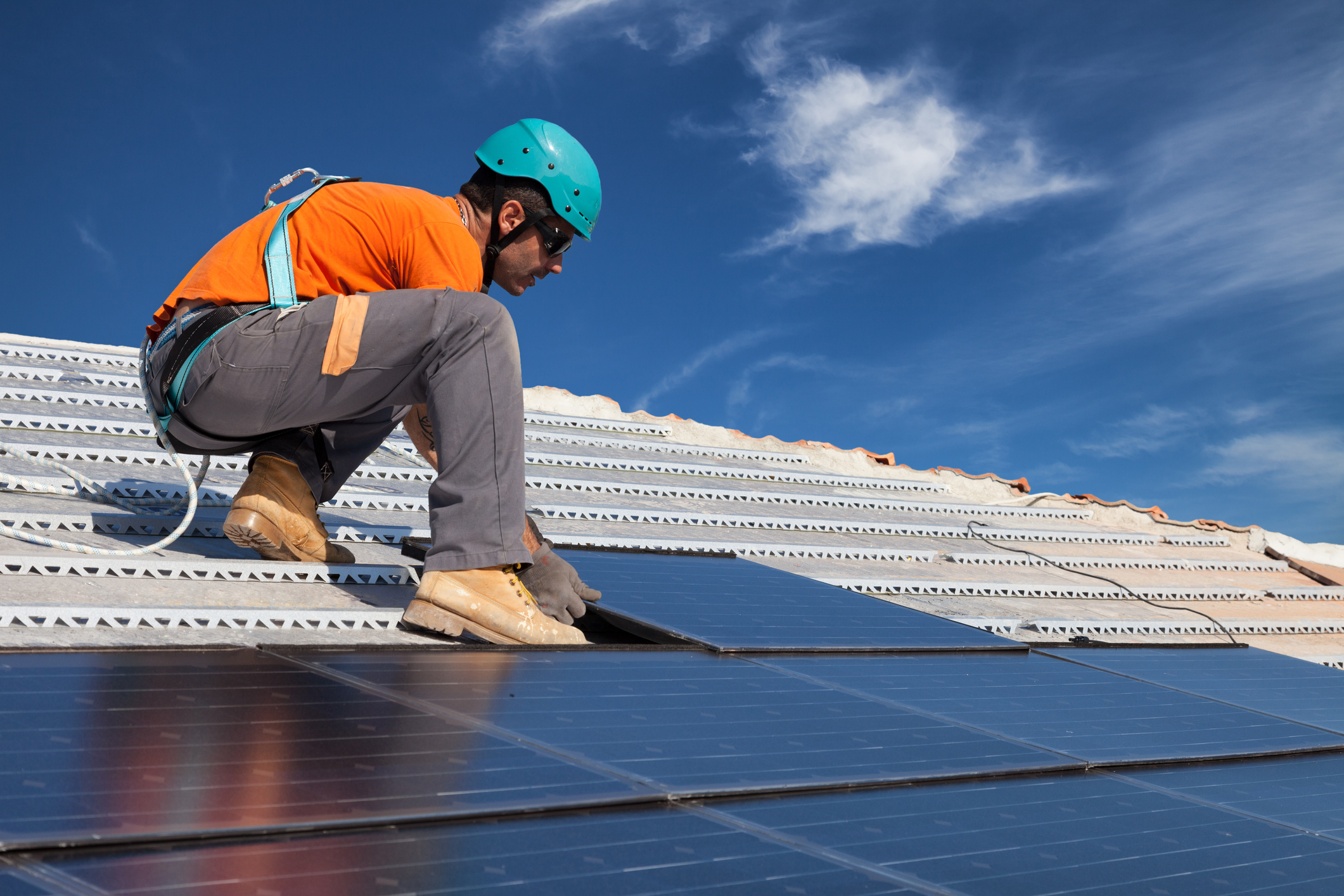
Your installer should take one to two days to install your solar panels. This involves: 

  • Putting up scaffolding: They might do this a few days before the installation date. 
  • Fixing brackets to your roof: These are what keep the solar panels in place.
  • Mounting the solar panels to the brackets. 
  • Connecting the inverter to your home’s electrical system: The inverter turns the DC electricity from the panels into AC electricity to use in your home. 
  • Installing any battery storage or PV diverters: These let you use more of the electricity your panels generate by storing it for later or using it to power an immersion heater. 

How much disruption does it cause?

There’s minimal disruption involved with installing solar panels. Once the scaffolding is up, the actual installation tends to be straightforward. The installer may need to turn your power off briefly to connect the panels to your home’s electricity, but that’s it

Can I install solar panels myself? 

We don’t recommend trying to install solar panels yourself. It’s best to use a qualified solar panel installer who’s certified with MCS. Even though you’re legally allowed to install the actual panels yourself, you still need to: 

  • Get a qualified electrician to connect the panels to your electrical system.
  • Usually have evidence you used an MCS-certified installer to qualify for any export payments.

6. Post-installation support

Once the panels are up, your installer will run some tests to make sure everything’s working. They should also guide you through checking how much electricity the panels are generating.  

The installer will also register your solar panel system (and any battery storage) with your District Network Operator (DNO). This is an important safety process.

What if I move somewhere that already has solar panels?

Solar panels are becoming more common, so it’s getting more likely that you’ll move into a home that already has them. 

For more information, read our guide on buying a house with solar panels.

7. Register for solar-friendly energy tariffs

Check out our guide to finding the best tariffs for different types of renewable energy.

If you don’t have a battery, you’ll typically export more of your unused solar electricity to the grid. If you do have a battery, you may still export excess electricity once the battery is fully charged. Either way, an export tariff can help you earn money from surplus generation.

In Great Britain, most energy suppliers are required to offer an export tariff under the Smart Export Guarantee (SEG). To sign up, you’ll usually need a smart meter and proof that your solar installation is certified. It’s a fairly simple process, and your installer can often help get you started.  

If you live in Northern Ireland, read the Northern Ireland Renewables Obligation

You don’t have to use the same company for your export and import tariffs. But some suppliers offer better rates if you bundle both, so it’s worth shopping around and comparing your options. 

Some energy suppliers also offer solar-specific energy tariffs, especially if you have solar panels and battery storage. 

These usually combine an export tariff with a smart time of use tariff. Time of use tariffs offer different electricity prices based on peak and off-peak times.  

Usually, to be eligible for these solar-specific tariffs, you need: 

  • battery storage as well as solar panels
  • to get your energy from that supplier

FAQs

How long does it take to install solar panels?

It takes one to two days to install a typical solar panel system. However, it can take longer if your system is more complex.

Do you need planning permission to install solar panels?

In most cases, no. Solar panels are ‘permitted developments’, which means you don’t need planning permission to install them on your home. However, there are exceptions, such as listed buildings or homes in conservation areas. It’s always best to check with your local planning office first.

Can solar panels be installed on a flat roof?

Yes, you can install solar panels on a flat roof. You might have more flexibility over the angle of the solar panels, helping you maximise the energy they generate. However, it can be more complex. This is because the panels may need additional mounting systems and the roof must be able to support the extra weight. This means it might cost more than installing solar panels on a pitched roof. Always speak with a certified installer to find the best solution for you.

Get energy saving advice delivered to your inbox

Sign up to Energywire, our monthly newsletter full of news, advice and tips on energy saving and renewable energy options.

Sign up to Energywire

Latest blogs

Go to blog

How Brian matched renewable tech with smart tariff to slash his energy bills

12 August 2026

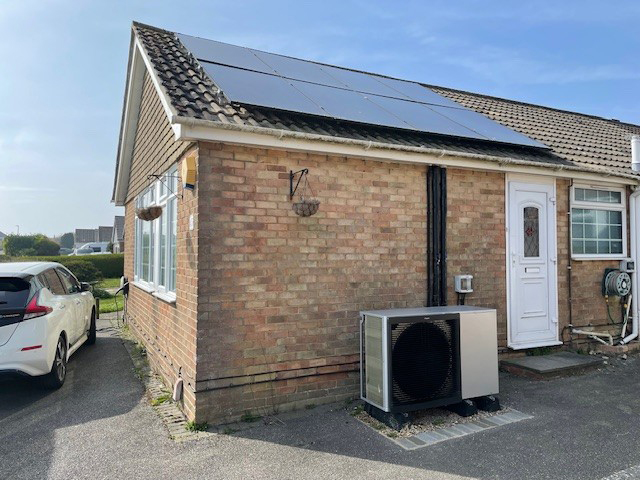
Read Brian's experience about the reality of switching from a gas boiler to an air source heat pump, powered by solar panels…

How local authorities can turn the Warm Homes Plan into action – takeaways from our event

3 August 2026

Local authorities don't need to wait for certainty before acting on the Warm Homes Plan. That was the clear message from our…

We looked at over a million heat pump, technology and tariff combinations. Here’s what really cuts energy bills

12 August 2026

Our experts tested over a million heat pump, battery and tariff combinations. Find out what cuts energy bills - and how much…

Categories:

Last updated: 25 August 2026