Keep your home cool in a heatwave by blocking out daytime heat and letting in cooler air at night. Our experts share their tips.
At a glance
Close windows and curtains during the day to keep heat out.
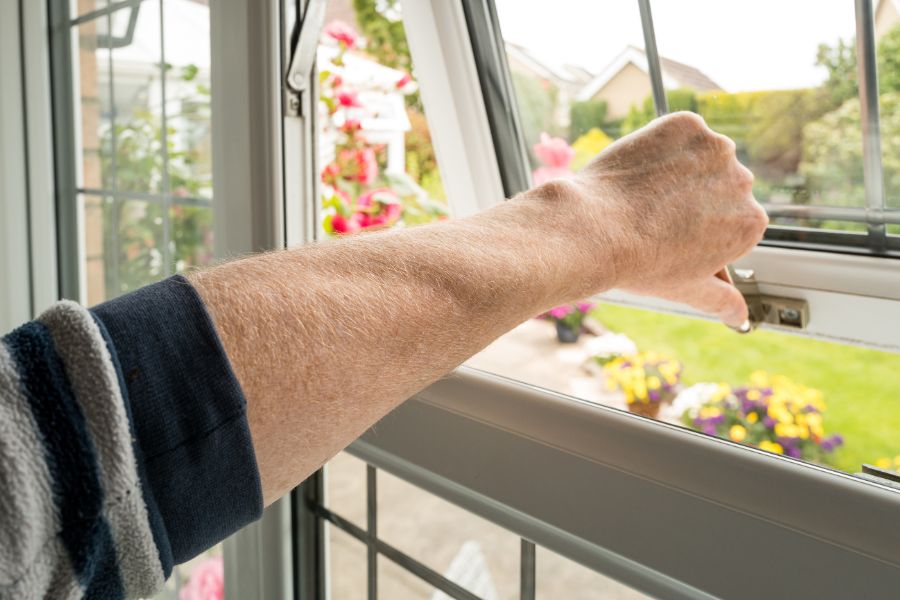
Open windows at night or early morning to let cooler air in.
Fans are the cheapest cooling appliances to run.
Stay cool in a heatwave: quick tips
If your home feels too hot, these steps will help you cool down right now:
Close windows and curtains during the day to keep heat out.
Open windows at night or early morning to let cooler air in.
Use a fan to move air across your skin.
Stay in shaded rooms and limit using ovens or appliances that give off heat.
What’s the cheapest way to stay cool?
Fans are the cheapest appliance to help you stay cool at home. They don’t lower the room temperature, but they help keep your body cool.
Our energy experts have looked at the running costs of different cooling appliances:
Cooling option
GB typical cost (24 hours use)
NI typical cost (24 hours use)
What it does
Best for
Fan (tower, desktop, pedestal)
£0.14 – £0.30
£0.17 – £0.37
Keeps your skin cool
Everyday cooling
Evaporative cooler
£0.27 – £0.39
£0.17 – £0.37
Adds moisture to cool nearby air
Small spaces
Portable air con
£4.62 – £5
£6 – £7
Actively cools the air
Very hot rooms
Running a portable air conditioner costs up to 20 times more than a fan, so only use it when you really need it.
How to keep your home cool for free
If you need to cool your home quickly, these tips cost are easy to do and cost nothing.
Open your windows when it’s cooler outside than inside
When the air is cool outside and if it’s safe to do so, open windows all around your house to let cool air flow through. This is mostly likely to be at night.
If it’s a particularly warm day and the air is warmer outside than inside, close windows to keep the warmer air out.
Close your blinds and curtains when the sun is on your windows
It’s usually easier to stop heat coming into the home than it is to cool it down again. Close blinds and curtains when the sun is shining through a window.
Only open them when the sun has moved away as this will prevent heat coming through the glass.
Do fans keep rooms cool?
No. Rather than cooling the air directly, fans create air movement that helps sweat to evaporate, keeping yourself cool. According to the NHS, electric fans are most effective when the temperature is below 35 °C.
More expensive tower, desktop and pedestal fans aren’t necessarily more efficient or cheaper to run than cheaper models either. Bladeless fans, which are often the most expensive to buy, have similar running costs to other models. So, the type of fan you choose largely depends on personal preference.
Due to their low energy use, fans have minimal CO2 emissions.
Top tip: using a small USB fan on your desk can be a cheap way to stay cool while working at your computer.
Are portable air conditioners worth it?
Although portable air conditioning units can cool rooms quickly, they’re significantly more expensive to buy than most fans and use much more energy.
Because air-con units use more energy than other cooling devices, running one also results in more CO2 emissions.
If you do need to use air conditioning, make sure you get the right size unit for the room you want to cool. Check that there are no gaps where the exhaust pipe goes out of the window, as this lets warm air back into the room.
Top tip: keep internal doors closed when an air-con unit is running to stop warm air entering from other parts of the house. When you turn the unit off, unplug it at the wall to stop it using energy while in standby mode.
What do evaporative air coolers do?
Evaporative air coolers remove heat from the air to lower its temperature. Instead of using a refrigerant chemical like in an air conditioner, evaporative air coolers use a fan to move air over water. When water evaporates, it cools the air in the space near the unit.
A small, portable evaporative air cooler is likely to have a similar or slightly higher running cost compared to a typical fan. But they’re generally more expensive to buy.
Compared to portable air-con units, evaporative air coolers use less energy and have lower CO2 emissions.
Make sure you keep rooms well ventilated. Since these units evaporate water, they can increase the amount of moisture in the air in your home.
Top tip: keep internal doors closed while using an evaporative cooler. This will prevent warm air from entering the room and unplug when not in use.
How can I make sure my home stays cool next summer?
Top up your insulation
Home insulation works in a similar way to a thermal mug or flask. Insulation slows the rate that heat escapes, keeping you warm in winter and cool in summer. Typical costs for wall, floor and loft or roof insulation depend on your home and the type of insulation you’re installing.
Add solar film to your windows
Adding solar film to your windows will help reduce the heating effect of sunlight shining through the glass. Costs vary depending on the film you choose as well as the size and number of windows you want to cover.
If you decide not to cover all of your windows, prioritise the ones that get the most sunlight. These include south facing windows, or those in rooms that get the warmest.
Consider an air-to-air heat pump
Air-to-air heat pumps are air conditioning units that can heat your home in winter and some models can also cool it during the summer.
They’re more common elsewhere in Europe than the UK. But as we see more frequent heatwaves and generally hotter summers, they may become a more common sight.
Not while the outside air is warmer than inside. If you do that, all you’re doing is encouraging warmer air to enter the house. Instead, wait until it’s cooler outside before opening the windows.
If you’re looking to spend less, or you only need to cool yourself, use a fan first. Air conditioning is better for cooling larger areas quickly.
Your house absorbs heat during the day and releases it slowly. If it’s safe to do so, open your windows at night to get rid of the extra heat.
You can cool yourself quickly by:
Sitting near the front of a fan
Moving to a cooler or shaded room
Closing your curtains to avoid direct sunlight
Drinking cold water
Yes. According to Met Office data going back as far as 1890, the five hottest summers on record have all happened in the last few decades. And in 2022, the UK saw its first day that was above 40°C.