Blog Post 22 January 2026

How to improve your EPC rating

At a glance

  • Improving your EPC rating can help you save money on your energy bills.
  • If you’re a landlord, you might have to have an EPC rating of E or higher to rent out your property.
  • Some suggestions are quick and easier but others might require more planning.

If you want to make energy efficient improvements to your home, a great place to start is your Energy Performance Certificate (EPC)

Your EPC gives your home a rating from A (very efficient) to G (inefficient). The EPC also includes recommendations to help you improve your rating.

Here we look at common EPC recommendations to help you understand how much you could save on your energy bills.

What do EPC ratings mean?

An Energy Performance Certificate (EPC) gives your home a rating from A (best) to G (worst). It looks like an efficiency score, but it’s actually based on the modelled cost of heating, hot water and lighting per square metre.

A better rating (closer to A) usually means lower typical running costs compared to a home of a similar size.

Your EPC also shows information about carbon emissions.

In Scotland, there’s a separate Environmental Impact (CO) rating alongside the main rating.

In England, Wales and Northern Ireland, the certificate includes carbon emissions information (for example, tonnes per year). However, the A to G EPC band is still based on running costs, not directly on carbon emissions.

How do I find my EPC rating?

If you live in England, Wales or Northern Ireland 

You can check your EPC rating by visiting the GOV.UK website. You’ll need to know: 

  • your postcode
  • your address (to confirm the specific property)

If you live in Scotland 

You can get your EPC from the Scottish EPC Register. You need to know either 

  • your address
  • the report reference number (RNN)

How do I improve the EPC rating of my home?

Your EPC is a good place to start if you’re thinking about improving your home.

The certificate includes a list of recommended improvements, such as adding insulation or upgrading your heating system. These are usually shown in order of cost‑effectiveness, based on some assumptions about how a typical home is used.

However, the recommendations are automatically generated using a national model. The energy assessor records details about your home, but they don’t design a retrofit plan. They may have limited ability to tailor the order or suitability of improvements for your specific situation.

Some improvements cost money and require you to own your home. However, there may be grants or support available, depending on where you live and your circumstances.

Find financial support for improving your home’s energy efficiency

Before going ahead with any major work, it’s always a good idea to get trusted, independent advice. This can help you:

  • check that measures are suitable for your home
  • decide the right order to do things in
  • avoid unintended issues, such as damp or ventilation problems
  • make the most of any available funding

Used this way, the EPC can help you understand your options, but it shouldn’t be the only thing you rely on when planning improvements.

Even if you rent, you could still make some of the recommended improvements. Read our energy saving tips for renters.

Common questions about EPC ratings

I’m a landlord – why should I improve my EPC rating?

You need to have a valid EPC if you’re renting out a property. An EPC is valid if it was produced by an accredited energy assessor within the last 10 years.

However, you may want to get a new EPC sooner if your home has changed since the last one was carried out. For example, if you’ve upgraded insulation, replaced the heating system or made other significant improvements.

Rent out a property in England or Wales? You might need to ensure that the property has an EPC rating of E or better to be allowed to do so.  This is to help tenants live in more energy efficient homes.

First, you should find out if your property is covered by the Domestic Minimum Energy Efficiency Standard (MEES) regulations. These regulations set the minimum energy efficiency level for domestic private rented properties.

If your property is required to meet the minimum standard but doesn’t, you need to improve its rating to at least an E rating. If you don’t, you face compliance notices and fines of up to £5,000.

Find out more about the Domestic Minimum Energy Efficiency Standard (MEES).

2026 update: The UK Government will consult on increasing the minimum energy efficiency rating for privately rented homes to C or its equivalent by 2030. We’ll update this guide with the results of the consultation when available.

I own my home – why should I improve my EPC rating?

Improving your home’s energy efficiency and therefore its EPC rating can help you:

  • Spend less on energy bills to heat your home
  • Reduce your carbon footprint

I’m selling a home – why do EPC ratings matter?

You need a valid EPC to sell your home. An EPC is valid if it was produced by an accredited energy assessor within the last 10 years.

However, you may want to get a new EPC sooner if your home has changed since the last one was carried out. For example, if you’ve upgraded insulation, replaced the heating system or made other significant improvements.

An EPC helps potential buyers see a home’s energy efficiency and what potential improvements they could make to the property once they own it.

If a potential buyer is keen to find a more energy efficient home, then having a higher EPC rating might be more attractive to them.

I’m buying a home – why do EPC ratings matter?

EPC ratings give homebuyers an idea of how energy efficient a home is and how much to expect energy bills to cost. They also suggest what improvements you can make once you own the home to improve its energy efficiency.

I have electric heating – how does that affect my EPC rating?

Homes with electric heating, including heat pumps, sometimes receive a lower EPC rating than similar homes heated by gas or oil.

This is because the EPC rating is based on the modelled cost of heating and hot water, using standard fuel prices. These prices are used to make EPCs comparable across the UK, but they may not match what you actually pay.

Electricity usually has a higher unit price than gas. This means the model can show higher running costs for electric heating, even when the system itself is efficient. This can reduce the A to G rating.

To make sure your EPC is as accurate as possible:

  • check that the assessor recorded the correct type of heating system (including the make and model where available)
  • make sure the correct electricity tariff was used (for example, Economy 7 with storage heaters)

It’s also important to know that carbon emissions are shown separately on the EPC. Electric heating (especially heat pumps) can have a lower carbon footprint than gas or oil, even if the main EPC rating looks worse.

A lower EPC rating doesn’t necessarily mean electric heating, or heat pumps, aren’t a good option. It reflects how running costs are modelled using standard prices, which may not match what you actually pay, especially as energy tariffs change over time.

Nine ways to improve your EPC 

An EPC’s recommendations will do at least one of these things

  • reduce the heat your home loses
  • make your heating system work more efficiently
  • help you use less electricity

We’ve ordered these recommendations so that the actions that are easiest to do come first. However, the actions towards the end of the list will have the biggest impact on your energy bills and carbon footprint.

If you’re looking for more quick ways to save energy, read our DIY energy saving projects guide.

Common recommendations on an EPC include:

1. Switch your lighting to LED

While it isn’t likely to make a huge difference to your EPC rating, switching to LED lighting is relatively easy to do.

Swapping halogen lightbulbs to energy efficient LED lights costs around £180. This should save £45 a year in Great Britain (GB) and £55 in Northern Ireland (NI). 

2. Insulate your hot water cylinder

A hot water cylinder jacket costs about £18.

It should be easy to install – just follow the manufacturer’s instructions. 

If you already have some foam insulation sprayed on your tank, check how thick it is. It should be at least 80mm thick – if it isn’t, you should consider buying a jacket.

Adding a British Standard jacket to a tank with only 25mm foam insulation could save around £40 a year in GB and £35 in NI.

A woman adjusting a digital central heating system thermostat while holding a smartphone showing the corresponding smart heating control app.

3. Install heating controls

Installing and using heating controls effectively requires a bit more investment, but can save you money in the long-term. 

If you already have a thermostat, try turning it down by just one degree (for example, from 22 to 21 degrees). This can save around £90 a year in GB or £80 in NI.

If you don’t have any heating controls, installing and using a full set can result in significant savings. Typical heating controls include: 

  • a programmer 
  • a room thermostat 
  • thermostatic radiator valves for all radiators 

You’ll need to pay around £550 to fully install these. However, using heating controls will help the average semi-detached house save £110 each year in GB and £110 in NI.

4. Replace boiler with a new condensing boiler

Older homes might have an older, inefficient boiler. But switching to a more efficient boiler can save you money on your energy bills.

Upgrading from a G-rated gas boiler with no heating controls to an A-rated boiler with full heating controls can save you £420 in GB. In Northern Ireland, upgrading an oil boiler can save £440 a year.

The costs for replacing an old boiler vary. For example: installing an A-rated condensing gas boiler plus a full set of heating controls will cost about £3,900.

The average lifespan of a boiler is 10 to 15 years, so you’ll make your money back with what you’ll save on your energy bills.

Replacing a boiler like-for-like isn’t your only option. You might consider switching to a low-carbon heating system like a heat pump instead.

5. Replace single glazed windows with double glazing

Around 18% of an uninsulated home’s heat is lost through windows, and this could be even higher in better insulated properties.

Double glazing is the most popular option to reduce this, but installation costs vary depending on the materials and style. For example: PVC windows tend to be cheaper, while hardwood frames are more expensive.

Installing A-rated double glazing to windows in an entirely single-glazed, semi-detached, gas heated property, should save £140 a year in GB and £140 in NI. 

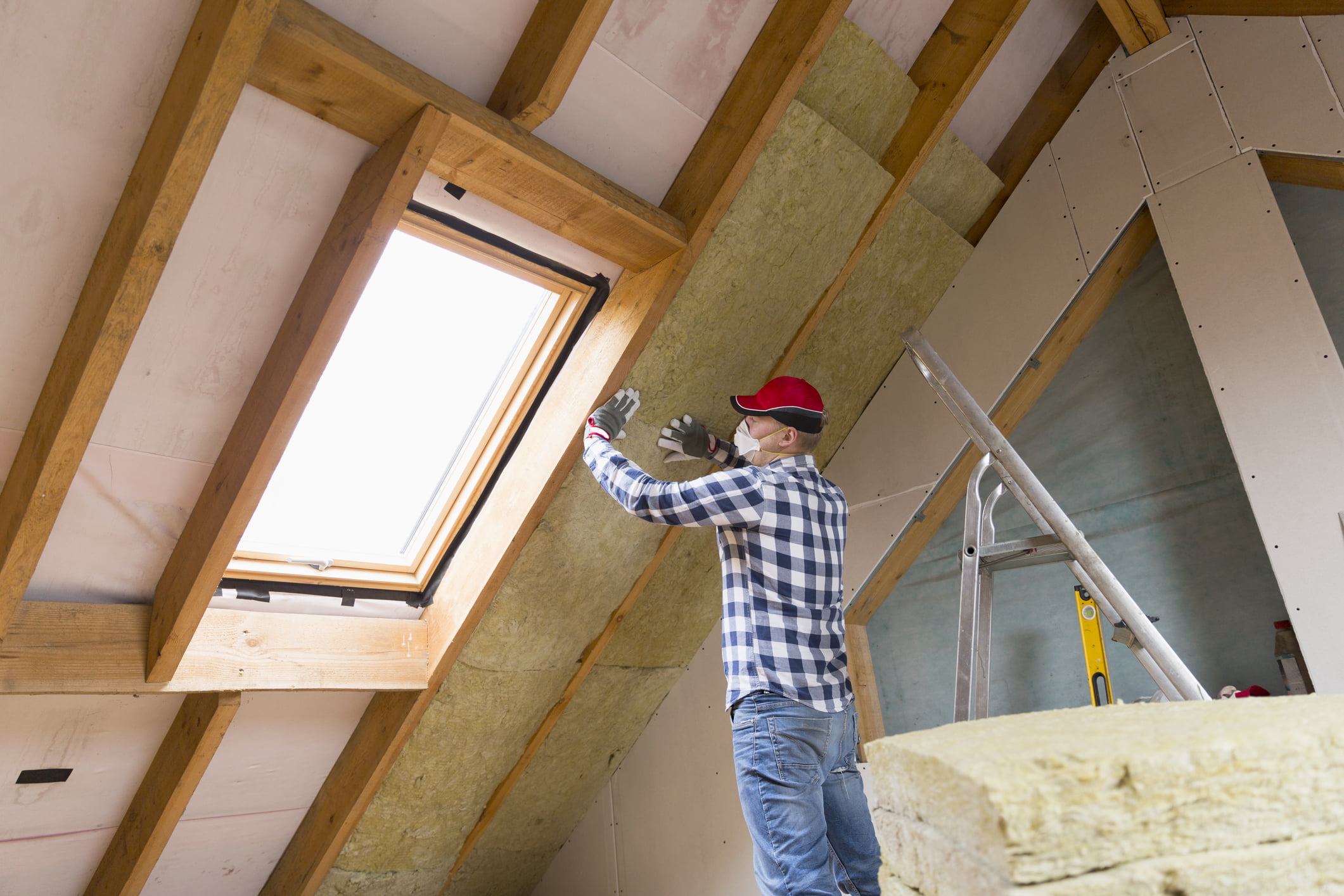
Man installing thermal roof insulation layer - using mineral wool panels. Attic renovation and insulation concept

6. Install or upgrade your loft insulation

Around 26% of an uninsulated home’s heat will escape through the roof. While most homes have at least some loft insulation, sometimes it’s not enough.

Topping up from 120mm to at least 270mm of insulation will help. This will save you around £20 each year on your bills in GB and £20 in NI.

If your loft is easy to access and has no damp or condensation problems, you might be able to install loft insulation yourself.

7. Insulate your floor

Floor insulation could save you around £70 a year in a semi-detached property in GB and £70 in NI. For detached homes, the savings could be £120 and £120 in NI. 

If you’re looking for a quick fix, you can seal the gaps between floors and skirting boards to help draught proof your home yourself. You can do this using a tube of sealant from any DIY store. Just make sure you have enough ventilation to maintain good air quality in your home.

8. Install wall insulation

Around a third of all the heat lost in an uninsulated home escapes through the walls, so it’s worth thinking about. While adding wall insulation can give you the greatest savings, it’s also one of the more expensive recommendations on the EPC. 

Most homes in the UK have cavity walls. This cavity can be filled insulation material to help keep heat inside your home. Insulating your cavity walls could save you around £240 a year in GB and £240 in NI on your energy bills. 

Does your home have solid walls? You can insulate solid walls from the inside or outside of your home. A semi-detached house could save around £330 a year in GB and £330 in NI after installing solid wall insulation. 

9. Install solar panels

If your budget for EPC improvements stretches to some bigger home renovation ideas, consider installing solar panels. These are the most common domestic renewable energy source in the UK. And once you’ve paid for installation, your energy costs will be significantly reduced.

Solar panels cost around £6,100 to install, but you’ll see savings of around £360 depending on where you live.*

*This figure includes the money from Smart Export Guarantee tariffs from any solar electricity you can’t use yourself.

What’s more, you’ll cut your household CO2 emissions by 750kg a year.

Get our monthly newsletter for more advice

Sign up to Energywire, our monthly newsletter full of news, advice and tips on energy saving and renewable energy options.

Sign up to our newsletter

Latest blogs

Go to blog

Heat pump tumble dryers and the new tumble dryer energy labels in Northern Ireland

20 May 2026

New energy labels for tumble dryers came into effect in Northern Ireland on 1 July 2025. Here’s what you need to know.

Measure, Plan, Act: a practical framework for delivering Net Zero in business

17 April 2026

What is Measure, Plan, Act and how can it help get you to corporate net zero?

Moving house energy checklist

1 May 2026

You should give your energy supplier at least 48 hours’ notice before you move. We walk you through what to do before…

Categories:

Last updated: 22 January 2026