
Blog Post 10 October 2025

Delivering warm homes through community power

Abigail Ward
Reviewed by
Abigail Ward
Policy Manager (England and Wales)

The Local Power Plan is set to support 8GW of local and community power by 2030. This is an ambitious target that, if realised, would deliver more renewable energy generation alongside significant social and economic benefits for communities.  

Yet, less attention has been given to how empowering a thriving, diverse community energy sector would help the UK Government achieve its target of upgrading 5 million homes through the Warm Homes Plan as well as achieve its fuel poverty goals 

Why community energy is well placed to support warm homes

Upgrading homes at pace and scale requires the mass rollout of energy efficiency and low carbon technologies. However, taking the step to upgrade your home will be a significant decision for every household and it is important that people are engaged in the transition in a variety of ways to ensure no one is left behind.

Research has found that social relations can affect decision making around carrying outenergy efficient home improvements. This means that family, friends, neighbors and the local community can have a considerable influence over whether a household decides to act.  

At its heart, community energy is about delivering citizen-led and owned renewable energy projects. This empowers local people to be engaged in and involved with the switch to renewable energy and low carbon technologies.

As such, community energy organisations are well placed to support the delivery of warm homes: 

  • They have a strong understanding of their local community, its characteristics and needs.
  • They’re uniquely placed to build trust and foster positive local engagement with energy efficiency and low carbon technologies and they can support households to understand how to make the most of these technologies once installed.
  • They can tailor messaging to what will resonate the most and act as a link between national level goals and delivery. 

In fact, the community energy sector is already supporting the delivery of warm homes in several ways. For example, Carbon Co-op has supported the delivery of an area-based retrofit scheme in South Manchester.

Here the community energy group acted as an intermediary between the professional parties involved and local residents, keeping them engaged and delivering hands-on support throughout the project to ensure all households understood what the improvements would mean for their homes. 

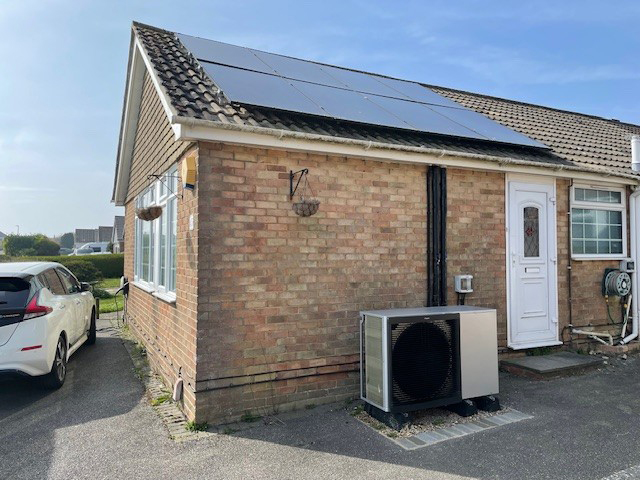
Organisations like Repowering London and Brighton and Hove Energy Services Co-Operative have also enabled the installation of solar panels on homes and apartment buildings. These projects help households experience the benefits of cheap, clean electricity.

Other organisations, like South East London Community Energy (SELCE), act as trusted messengers within the local community. They deliver energy advice and energy efficient improvements to help local people reduce their energy bills and address fuel poverty.  
How both plans could work together

The Local Power Plan and the Warm Homes Plan have the potential to scale up the role of community energy in upgrading homes. However, this won’t be realised unless there’s a clear recognition of community energy’s role in retrofit policy and an established link between both plans.  

The UK Government should encourage local and combined authorities delivering retrofit schemes to partner with community energy organisations to upgrade homes in their areas. If the Warm Homes Plan moves towards an area-based delivery approach, there are several activities that community energy organisations could support with. These include: 

  • Giving locally tailored energy advice, including supporting households post-installation.
  • Lead generation for local retrofit schemes. 
  • Engaging hard to reach households, helping to ensure that low income and vulnerable households are benefitting from such schemes.
  • Delivering installations. 

Local authorities looking to partner with community energy organisation may face challenges relating to due diligence and procurement requirements. To make this process as easy as possible for both parties, the UK Government should provide templates and guidance to support setting up formal partnerships. 

A joined-up approach to delivery could also help maximise the impact of funding provided through both plans. For example, Hackney Council’s community energy fund links local buildings with community energy organisations to support decarbonisation of the public building stock. This type of matching exercise could be supported through the Local Power Plan to help the public sector decarbonise, particularly considering the removal of the Public Sector Decarbonisation Scheme.

Also, there may be potential for this type of collaborative model to work in domestic buildings. For example, where a community energy organisation supports the delivery of technologies like solar panels in households being supported through locally delivered retrofit schemes. The feasibility of this type of collaborative model could be explored through further innovation and pilot programmes.  

Revenue generated from community energy generation projects is often funnelled into local energy efficiency and fuel poverty initiatives. Projects such as the Ouse Valley Solar Farm from OVESCO will invest surplus profits into energy advice provision for the local community. Energise Barnsley, who we’ve supported through Ofgem’s Energy Redress scheme, has recycled feed-in tariff revenues. This is part of their financing model to install solar panels on 287 council owned homes.  

If a revenue certainty mechanism was introduced for community energy that supported viable business models, more projects would come through the pipeline and support revenue generation. This would enable groups to reinvest greater levels of surplus revenue into initiatives that support home upgrades in their area and increase their impact.  

The publication of both plans this autumn presents a clear opportunity to ensure we maximise the potential of community energy in achieving our goals of: 

  • delivering warmer homes 
  • lowering energy bills 
  • addressing fuel poverty 
  • reducing our carbon emissions

Ultimately, community energy organisations can enable a just transition to net zero. But it needs the UK Government to grasp this opportunity to make both plans work effectively together.  

Latest blogs

Go to blog

Heat pump tumble dryers and the new tumble dryer energy labels in Northern Ireland

20 May 2026

New energy labels for tumble dryers came into effect in Northern Ireland on 1 July 2025. Here’s what you need to know.

Measure, Plan, Act: a practical framework for delivering Net Zero in business

9 June 2026

What is Measure, Plan, Act and how can it help get you to corporate net zero?

Moving house energy checklist

1 May 2026

You should give your energy supplier at least 48 hours’ notice before you move. We walk you through what to do before…

Categories:

Last updated: 9 October 2025